





news
Your Car's Foundation: Why Quality Chassis Parts Mean Safer Drives
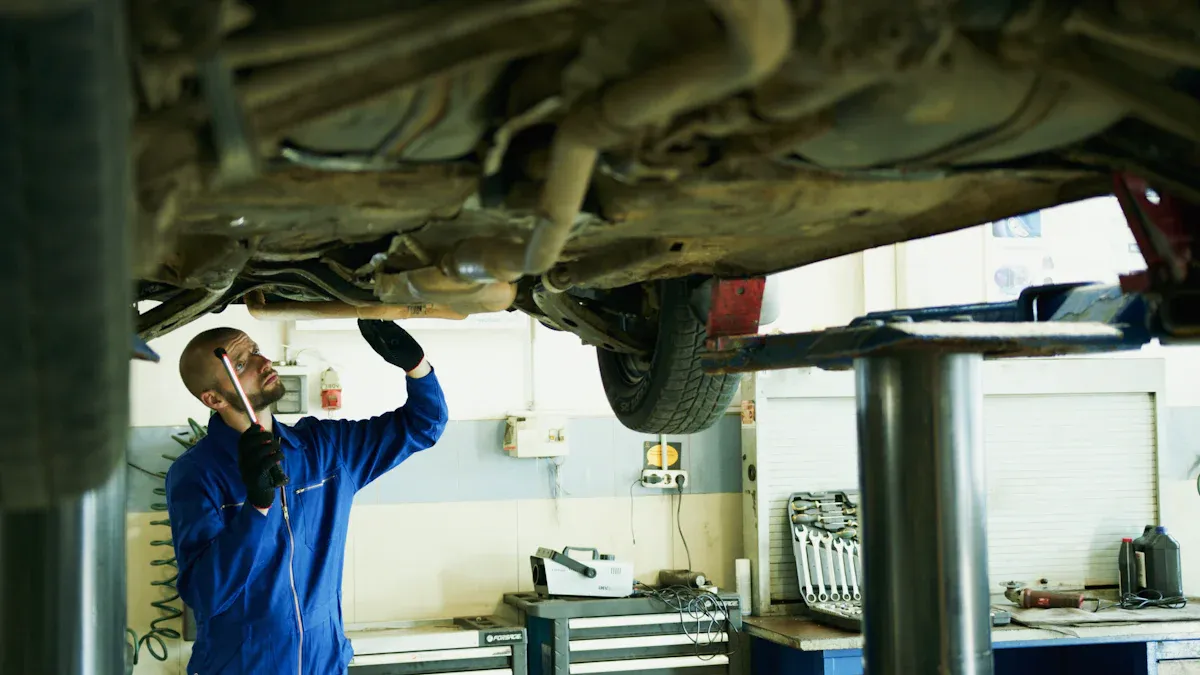
I believe the integrity of your vehicle's foundation is paramount for every journey. The unseen components beneath your car directly safeguard you and your passengers. Robust engineering in your auto chassis parts provides essential peace of mind. I always prioritize this critical link for safe and confident driving.
Key Takeaways
- Your car's chassis is its main structure. It holds everything together and keeps you safe.
- Good chassis parts make your car stable. They help you control it better, especially when turning or stopping.
- Quality chassis parts protect you in a crash. They absorb impact energy to keep you safe.
- Using good chassis parts makes your car last longer. It also helps your car work better and saves you money on repairs.
- Always choose reliable parts and get them installed by experts. This keeps you safe and protects your car's value.
Understanding Essential Auto Chassis Parts
What Constitutes Your Vehicle's Core Structure
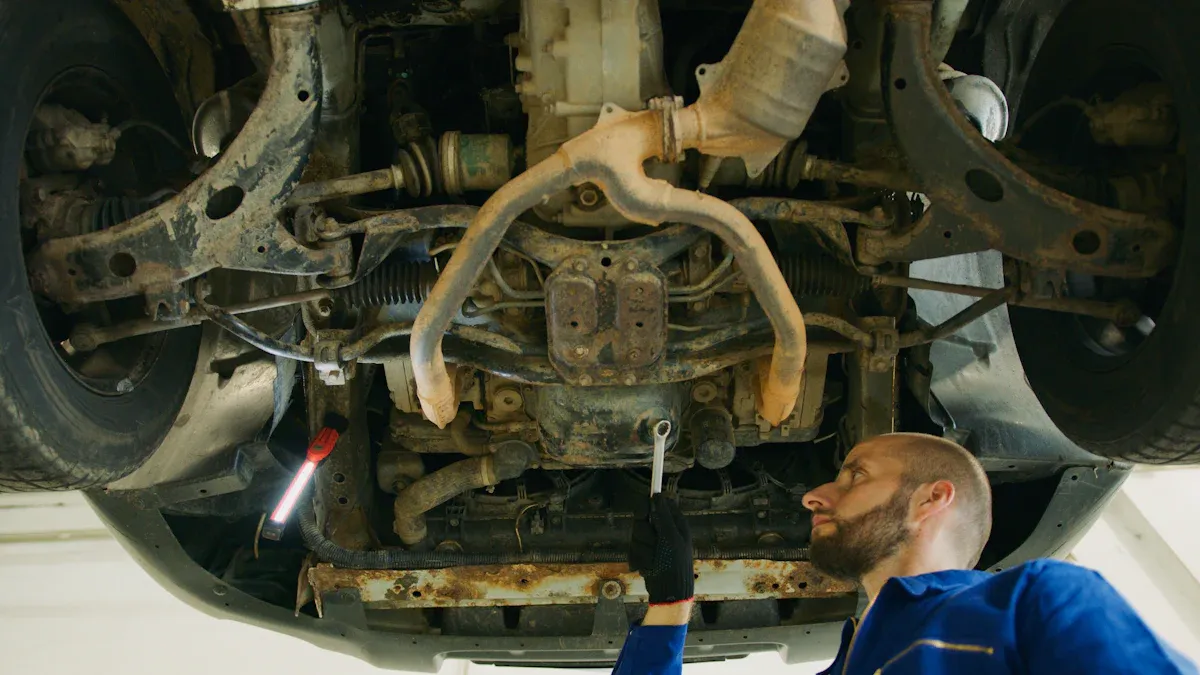
I often think of my car's chassis as its very skeleton. It provides the shape, rigidity, and strength for everything else. This core structure supports the body, engine, transmission, suspension, and wheels. It is a complex network of interconnected parts. I see the frame rails as the primary load-bearing components. These long, parallel beams run along the sides of the car. They manage the vehicle's weight and driving forces. Crossmembers are horizontal bars. They connect the frame rails, adding support and stability. These are strategically placed to support crucial elements like the transmission and steering system. The suspension system is also a vital part of this structure. It connects the tires, shock absorbers, springs, and linkages to the wheels. This entire assembly forms the foundation of my vehicle.
Key Functions of Chassis Components
These auto chassis parts do much more than just hold things together. I rely on them for several critical functions. First, the chassis evenly distributes my car's weight. This ensures balance and stability on the road. Second, it plays a huge role in safety. It absorbs and distributes crash energy through crumple zones. This reduces impact forces on me and my passengers. Third, the chassis provides a rigid foundation. It offers attachment points for essential car parts. This includes the steering, suspension, brakes, engine, and transmission. Some chassis designs also help dampen noise and vibrations. This gives me a more comfortable ride. I know these components work together to keep my drive smooth and secure.
How Quality Auto Chassis Parts Ensure Safety
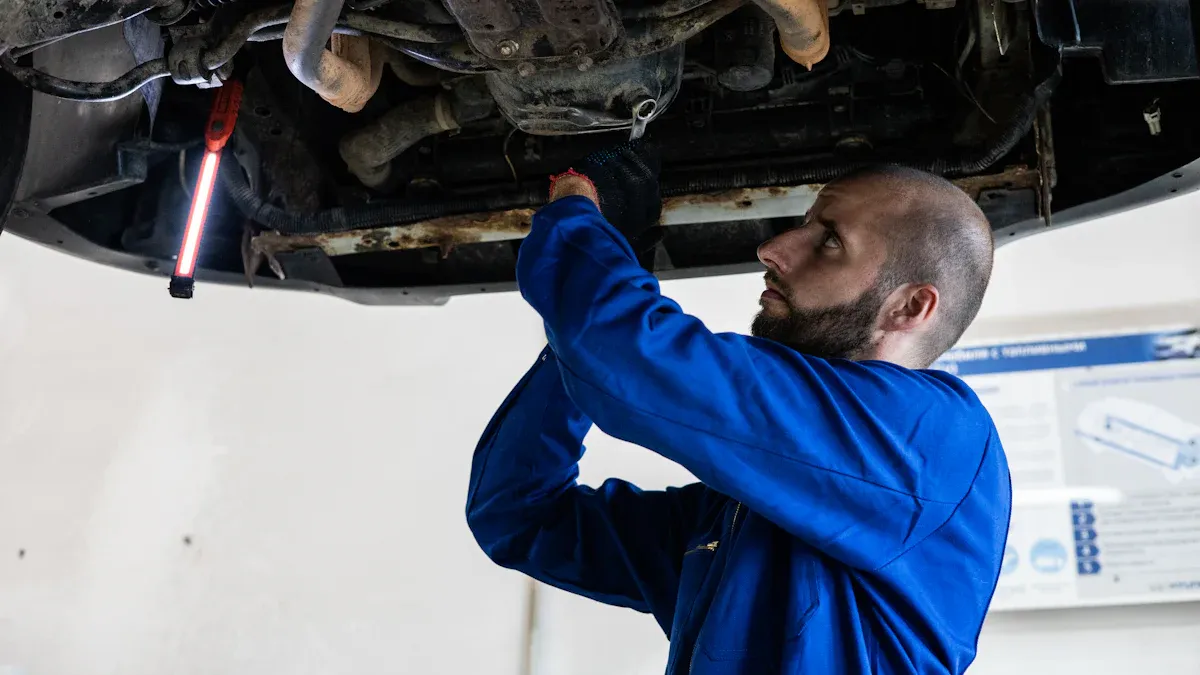
I believe quality auto chassis parts are not just about performance; they are fundamentally about safety. They form the critical link between your car and the road. These components work tirelessly to keep you secure. I want to show you how they achieve this.
Enhancing Vehicle Stability and Control
I know a stable car feels safer. Quality suspension components are key. They improve vehicle stability, especially when I take a corner.
“Spring design plays an essential role in enhancing cornering stability by providing consistent tire contact and mitigating any lateral forces acting on the vehicle during turns.”
I see how springs absorb shocks. They ensure my tires stay connected to the road. This gives me consistent handling. When I turn, springs quickly absorb and release energy. This keeps the outside tires carrying more weight. High-performance lowering springs improve handling. They reduce body roll. They also enhance cornering grip. Advanced suspension designs use innovative spring materials. They have adaptive damping systems. These improve shock absorption. They increase grip. They optimize weight distribution for better cornering stability. Shock absorbers work with springs. They dampen motion. They prevent excessive bouncing. They minimize body roll and brake dive. Stabilizer bars, also called sway bars, prevent excessive body roll during cornering. They transfer force from one side of the vehicle to the other. This increases stability.
I understand lateral forces during cornering. They can cause understeer. This is when the front slides out. They can also cause oversteer. This is when the rear loses grip. Optimal tailored spring solutions ensure consistent tire contact. They provide appropriate wheel load distribution. This improves cornering stability and safety. Adjusting spring stiffness is critical. A stiffer front end reduces understeer. It improves front wheel grip. A stiffer rear end reduces oversteer. It increases rear wheel grip. These robust auto chassis parts are vital for my confidence on the road.
I also rely on advanced chassis technologies. They enhance vehicle control, especially in tough conditions. Automotive Dynamic Chassis Control Systems are advanced. They improve stability, safety, and comfort. They adjust suspension, braking, and steering in real-time. These electronic systems monitor vehicle dynamics. They use sensors and actuators. They respond instantly to driving conditions. They manage suspension stiffness. They handle braking force distribution. They make steering adjustments. This improves handling. They reduce body roll during cornering. They minimize pitch during acceleration or braking. They maintain optimal tire contact with the road. These systems integrate electronic stability control. They use adaptive suspension. They have active steering. This delivers a cohesive driving experience.
I see other innovations too. * Chassis-by-wire technology expands control. It moves from two-dimensional to three-dimensional motion. * Chassis active safety control technology improves stability. It works in extreme conditions. * Multi-model switching control for suspension systems balances comfort and handling. * Distributed chassis systems feature in-wheel motors. They have corner modules. * Electronic control suspension (ECS) systems are crucial. They provide ride comfort and handling stability. * Intelligent vehicle corner module systems integrate many functions. They have four-wheel independent drive, steering, braking, and active suspension. This gives precise vehicle control.
Optimizing Impact Absorption for Occupant Protection
I know that in an accident, my car's chassis protects me. It absorbs impact energy. Improvements to crashworthiness involve modifying vehicle structures. They use innovative materials. These absorb kinetic impact energy more effectively. * Energy absorbers or crash boxes are common. They are installed between bumper beams and longitudinals. They absorb impact energy at speeds up to 20–25 km/h. * Energy-absorbing materials dissipate kinetic impact energy. They do this through friction and plastic deformation. This ensures the force impulse stays below a critical level. It protects passengers. * Multi-cell structures of various shapes are used. They are in the automotive industry for energy absorption. * Common materials for energy-absorbing components include low-carbon steel. They also use aluminum alloys. Metallic and non-metallic foams are also used.
I find architected materials fascinating. They offer new opportunities. They manage impact absorption. Engineers can tailor a structure's deformation. This absorbs and reduces impact energy. * Architected materials are highly-engineered structures. They have customizable properties. These properties can vary in space or over time. * When combined with additive manufacturing, they allow advanced product design. This includes 3D printed foams for impact absorption. It also includes lattice structures for protective equipment like helmets. * These materials suit applications requiring crashworthiness. They are good for efficient energy storage and diffusion. This is due to their ability to absorb high amounts of mechanical energy.
I have seen research on this. * Paulius Griskevicius and Antanas Ziliukas (2003) studied energy absorption. They looked at design, material distribution, and lamination. They used reinforced epoxy composite absorbers. These were for bumper energy absorbers in pedestrian crash analysis. Composites ensure maximum energy absorption. This happens during collisions. It minimizes energy transfer to the cabin or pedestrians. * Gary L. Farley (1983) tested aluminum and hybrid composite tubes. Preliminary tests showed modification reduced peak loads. Static and Dynamic Crushing Tests and Impact tests revealed Gr/E absorbed more energy than K/E or GI/E. Hybrid composites showed slightly better energy absorption. * S. Boria (2015) observed CFRP composite material. It is used as an impact attenuator in Formula SAE racing cars. Finite element models showed stable, progressive behavior. This was during crushing experiments on circular tubes. * N.A. Warrior et al. (2003) found resin processing properties affect crush performance. Glass/Epoxy absorbed more energy than glass/vinyl. Glass/vinyl absorbed more than glass/polyester. Glass/vinyl and glass/polyester offered high SEA/cost performance. Vinyl ester showed a 33% increase in energy absorption over polyester. * S. Ramakrishna and H. Hamanda (1998) found polymer composite materials have good energy-absorbing properties. This is during vehicle crashes. Controlled energy absorption is possible. It comes from selecting the microstructure of composite material and component geometry. Specific energy links to microfracture processes. This is in the crash zone. Energy absorption characteristics can be controlled. This is by adjusting fiber and resin properties. * Lingyu Sun (2009) investigated nanocomposites. They are good energy absorbers. They have higher stiffness than conventional fiber-reinforced polymer composites. This is during vibration damping and low-speed impact. This is due to supramolecular bonding. It is between nanofiller and matrix. This results in high shear strength and tensile strength. * P.H. Thorton (1985) stated FRP composites are ideal energy absorbers. This is due to their low weight. It compares to conventional steel. Composites absorb large amounts of energy. This is through fiber fracture. Metals use plastic deformation as the primary source. * S. PADMA et al. (2006) found mixing PMMA and PC with epoxy resin enhances strength. It improves tensile strength, flexural strength, and impact strength of composites.
I know passive safety systems are crucial. This includes the vehicle's physical structure. It is for crashworthiness. The structural design must absorb energy. This happens during a collision. It meets crashworthiness regulations. It prevents occupant injuries. * Composite materials like CFRP, Gr/E, K/E, GI/E, polymer, epoxy, nanocomposites, and fiber-reinforced plastic composites are used. They are for energy absorption. Each has different capacities and weights. * Hollow or shell components of energy absorbers are more effective. They are better than solid components. * Chopped carbon fiber (CCF) composite material and epoxy show good impact behavior. Chopped fiber has greater Specific Energy Absorption (SEA). Carbon fiber resins and composites are best for crash safety. * Aluminum foam materials have higher energy-absorbing capacity. They are better than normal aluminum. They offer 25-30% weight and cost savings. This is due to their lightweight, inexpensive, corrosion-resistant, and recyclable properties. They also have high ultimate tensile strength. * Carbon fiber reinforced plastic (CFRP) distorts when crushed. Aluminum folds. Carbon composites show the lowest deformation. They have maximum Von Mises stress for energy absorption. Using composite materials can achieve a 106% weight reduction. This compares to iron and steel. * Hollow structures of aluminum alloys absorb more energy. They are better than solid structures. These materials are also used in bumpers and bonnets. * The crumple zone of a vehicle must be strong enough. It prevents the engine from entering the passenger compartment. This happens during crushing. It could cause severe injury or death.
I trust crumple zones. They are a vital part of chassis design. * Crumple zones manage crash energy. They increase the time over which occupants decelerate. This prevents intrusion into or deformation of the passenger cabin. * They achieve this by controlled weakening. This is of sacrificial outer parts of the car. They strengthen and increase the rigidity of the inner part. This forms a 'safety cell'. * Impact energy that reaches the 'safety cell' spreads over a wide area. This reduces deformation.
I want to clear up a misconception. Some think crumple zones reduce safety. They believe the body collapses and risks crushing occupants. In reality, crumple zones are typically in front of and behind the main body. This is the rigid 'safety cell'. They compact within the engine compartment or boot/trunk. Modern vehicles with crumple zones offer superior protection. This is in severe tests. They are better than older models or SUVs without them.
I know modern car monocoque construction is safer. It is safer than a vehicle with a rigid chassis. This is partly due to the crumple zone. This zone collapses in a collision. It absorbs some impact energy. It does not directly transfer it to the vehicle occupants.
I understand the core idea of crashworthiness design. It involves presetting a crumple zone. This absorbs the kinetic energy of vehicles during crashes. It potentially lowers acceleration. In a frontal crash, the stiffness of the front structure determines the acceleration pulse. This pulse should have a specific shape. It minimizes occupant risk.
Guaranteeing Reliable Braking and Steering Response
I demand precise steering. High-quality steering linkages are essential. * They provide precise and responsive steering control. This allows me to maneuver the vehicle effectively. This is true in various driving conditions. * They minimize steering errors. They ensure the wheels turn at the correct angles. This is for optimal handling and stability.
I experience improved steering feedback. * It eliminates dead zones or slop in steering inputs. * It provides consistent toe under load. This maintains geometry through compression and roll. * It reduces bump steer. This keeps tire angle predictable over uneven surfaces. * It allows precision drift transitions. The wheel returns smoothly to center after angle.
I know the inner tie rod links the steering rack to the outer tie rod. It transmits motion to the wheel hub. Stock tie rods are for comfort. They use rubber bushings or softer ball joints. These introduce play and flex. Performance-grade inner tie rods replace these. They use hardened spherical joints. They have precision-machined threads. They use reinforced housings. This design maintains alignment and feedback. This is even under intense loads. It is crucial for accurate steering inputs. It ensures consistent geometry. This is especially true in demanding conditions like drifting.
I rely on my chassis for consistent braking. A chassis with strong structural integrity provides a stable base. This is for braking components. It ensures they function effectively. When I apply brakes, significant force generates. It transfers through the chassis to the wheels. If the chassis lacks strength, it can deform or flex. This compromises braking performance. For instance, inadequate stiffness can lead to caliper misalignment. This happens during hard braking. It causes uneven pad wear. It reduces efficiency. It leads to longer stopping distances. Conversely, a rigid chassis maintains proper alignment. It allows components to work together. This is for consistent braking. The chassis must distribute braking forces evenly. This is across the vehicle. It is especially true in multi-axle or independent suspension systems. This prevents wheel lockup and skidding. It optimizes stability and control during braking.
I understand the chassis influences weight distribution. This affects braking balance. Braking balance is the proportion of braking force. It applies to the front and rear wheels. Proper braking balance is crucial. It is for safe and efficient braking. It prevents wheel lockup. It maintains stability. Chassis design dictates weight distribution. It positions heavy components. This includes the engine, transmission, and fuel tank. For example, a front-engine, rear-wheel-drive vehicle has more weight over the front wheels. This leads to greater front brake force. A rear-engine, rear-wheel-drive vehicle might have a more balanced weight distribution. This allows for a more even distribution of braking force. Optimizing weight distribution through careful chassis design ensures the braking system performs at its best.
I know the chassis prevents brake fade. This is a temporary loss of braking performance. It is due to overheating. During braking, friction generates heat. This is between brake pads and rotors. If this heat isn't dissipated, brake pads can glaze. Brake fluid can boil. Rotors can warp. All these reduce braking performance. Modern chassis designs incorporate features. They use heat-dissipating enclosures. These increase the surface area of brakes. They facilitate efficient heat transfer to the air. Some designs include ventilation channels or ducts. They direct cool air to the brakes. This enhances cooling efficiency.
I see the chassis facilitates interaction. This is between the suspension and braking systems. The suspension maintains tire contact with the road. It ensures effective transfer of braking forces. During braking, vehicle weight shifts forward. It compresses the front suspension. It extends the rear. This weight transfer impacts handling, stability, and braking performance. A well-designed chassis, with a tuned suspension, minimizes weight transfer effects. It maintains optimal tire contact. This keeps tires firmly on the ground during braking. It reduces wheel lockup and skidding. The chassis also supports suspension components. It ensures smooth and efficient operation. This is under high braking loads.
I know the choice of chassis materials impacts the braking system. This is due to varying properties. These include strength, stiffness, and weight. Lightweight aluminum chassis improve fuel efficiency and braking performance. But aluminum is softer than steel. It may require specific braking components or design considerations. Steel is a traditional choice. It offers strength and durability. It provides a robust braking system foundation. Its heavier weight can negatively affect fuel efficiency and handling. Selecting the appropriate chassis material is essential. It depends on vehicle type, performance needs, and cost. It ensures optimal braking system compatibility and performance.
Beyond Safety: Performance and Durability of Auto Chassis Parts
I believe quality auto chassis parts offer more than just safety. They significantly boost your vehicle's overall performance and ensure its long-term durability. Investing in superior components pays off in many ways.
Maximizing Overall Vehicle Performance
I know a car performs better when it is lighter. Lightweighting is a very effective strategy. It improves overall vehicle efficiency. This applies to both traditional and electric vehicles. For electric vehicles, weight reduction is especially beneficial. Heavy battery packs make this important. Lighter chassis allow for larger batteries and extended range. A secondary effect of lightweighting is the ability to downsize powertrain and transmission systems.
I see how we achieve lightweighting. We replace materials with lower density alternatives. We also optimize designs. For example, tailored blank steel sheets allow for selective toughening in necessary areas. They control overall weight. Advanced high-strength steels (AHSS) enable reduced sheet metal thickness. They do not compromise strength and stiffness in chassis construction.
Advanced chassis materials enable 'mass decompounding.' An initial reduction in chassis weight leads to further savings in other subsystems. For instance, a lighter chassis allows for a smaller and lighter engine. This in turn requires smaller brakes. This cascading effect can result in secondary mass savings. These are significantly greater than the initial weight reduction. In electric vehicles, this is even more critical. Lighter chassis can offset the weight of dense batteries. This improves range.
The automotive industry increasingly adopts mixed-material designs. It integrates steels, plastics, aluminum alloys, magnesium alloys, and carbon composites. This happens within the same vehicle platform. This approach involves bonding and hybridizing dissimilar materials. It achieves new levels of performance. It moves away from a 'one-size-fits-all' material solution. Weight reduction contributes to improved driving economy. It also offers better braking behaviors and enhanced crashworthiness. Developing and implementing lightweight, high-performance materials is an effective strategy. It replaces conventional automotive materials like cast iron and steel.
I also know a rigid chassis significantly enhances vehicle performance. It improves control and safety. It provides a stable foundation for the suspension. It minimizes chassis flex. Chassis flex acts as an unpredictable 'fifth spring.' This rigidity prevents delayed steering response. It improves cornering ability. It eliminates 'chassis steer' caused by flex-induced alignment changes. This ultimately leads to quicker lap times and better driver control.
I experience enhanced steering sensitivity with quality auto chassis parts. Adjustments lead to sharper steering input. This creates a more direct connection between me and the road. Suspension upgrades are crucial for better handling. They effectively manage increased power. They improve stability and handling. Broader and high-performance tires offer superior grip. They enable smoother and quicker cornering. They ensure efficient power transfer. Upgraded shock absorbers and springs reduce body roll during sharp turns. They enhance vehicle stability. They keep the car planted for confident driving. This is especially true on winding roads.
Extending Component Lifespan and Reducing Wear
I understand that quality materials and precise engineering directly translate to longer component life. When manufacturers use superior metals, alloys, and composites, these parts resist fatigue and corrosion better. They withstand the constant stresses of driving. This means fewer replacements and less wear over time. For example, a well-designed suspension arm made from high-strength steel will outlast one made from a lesser material. It handles bumps and turns without premature bending or cracking. This durability extends to all critical chassis components. It includes bushings, bearings, and linkages. They maintain their integrity longer. This ensures consistent performance throughout the vehicle's life.
The Financial Benefits of Long-Term Reliability
I see the long-term financial benefits of investing in durable chassis components. For heavy-duty trucks, adopting high-strength steel and composite materials in chassis frames leads to a 10% reduction in maintenance costs. For construction machinery and off-road vehicles, improved durability in chassis frames results in a 15% reduction in downtime. These savings add up significantly over time. They reduce the need for frequent repairs and replacements.
I also understand how structural damage impacts a vehicle's value. A car that has undergone structural damage and subsequent repairs typically experiences a reduction in its resale value. This happens compared to vehicles without such damage. The extent of this value loss can vary. It depends on the specific vehicle and the severity of the damage incurred. Information regarding the severity of a crash, distinguishing between cosmetic and more serious issues, can often be found in a vehicle's history report. By maintaining a vehicle with high-quality auto chassis parts, I protect its structural integrity. This preserves its resale value. It ensures I get a better return on my investment when it is time to sell.
The Risks of Substandard Auto Chassis Parts
I always emphasize the importance of quality. Choosing substandard auto chassis parts introduces serious risks. These risks affect your safety, your wallet, and your vehicle's long-term value. I want to explain why I avoid cutting corners here.
Increased Accident Vulnerability
I know mechanical failures can cause serious car accidents. Critical parts often fail unexpectedly, especially at high speeds. This leads to severe damage. Faulty braking systems are a major concern for me. Worn brake pads, leaking fluid, or ABS malfunctions make stopping difficult. This can cause collisions. Steering and suspension failures are also dangerous. A damaged system can make my car sway or pull sharply. It becomes unstable. Complete system failure mid-trip means I cannot stay on the road. This results in crashes.
I also worry about compromised chassis integrity. A bent or shifted frame misaligns the entire vehicle structure. This makes it harder to control. My car might pull to one side. It could respond sluggishly to steering inputs. Altered steering geometry makes the car feel loose or unstable during turns. Frame instability affects weight distribution. This leads to unpredictable braking and delayed responses during maneuvers. At higher speeds, instability and vibrations can occur, especially during cornering.
Frequent Repairs and Unexpected Costs
I have seen how substandard parts lead to a cycle of repairs. They often fail prematurely. This happens compared to original equipment manufacturer (OEM) components. A cheap part might save money initially. However, it can cause catastrophic failure if it malfunctions. For instance, an improperly installed suspension lift can lead to early wear on joints, axles, and tires. These subsequent repairs quickly exceed any initial savings. This results in significant unexpected repair bills.
Poorly made parts often have casting issues. They might have rough surfaces or pinholes. These can contaminate the engine. They damage moving parts. This leads to increased crankcase pressure and other damages. Inappropriate materials also compromise integrity. They lead to premature failure and damage to allied components. Delaying repairs for frame or chassis damage often results in more extensive damage over time. This leads to larger and more costly repair bills.
Compromising Your Vehicle's Value
I understand that using non-OEM parts can negatively impact my vehicle's value. Manufacturers can deny warranty claims if I use non-OEM parts or deviate from recommended procedures. This applies to bumper-to-bumper, powertrain, corrosion, and emissions warranties. Aftermarket parts often lack the material quality, proper fit, and reliability of OEM parts. This negatively impacts performance, structural integrity, and safety features. Repairs using aftermarket or salvage parts can cause issues like rust, electrical failures, and failed safety checks. This affects long-term dependability and safety. A vehicle with a history of frame or chassis damage, especially if not properly repaired, experiences a significant drop in resale value. I want my investment to hold its value.
Making Informed Choices for Your Auto Chassis Parts
Identifying Reputable Manufacturers and Suppliers
I always choose wisely when buying parts for my car. I know reputable manufacturers and suppliers are crucial. I look for specific certifications. These show a company's commitment to quality.
- ISO 9001 tells me they have strong quality control.
- ISO/TS 16949 (IATF 16949) is a big one for automotive parts. It means they focus on preventing defects.
- CAPA certification ensures aftermarket parts meet or exceed original specifications.
- NSF certifies components meet OEM quality.
- ISO 14001 shows they care about the environment.
- ISO 45001 means they prioritize worker safety.
These certifications give me confidence in the parts I choose.
The Importance of Professional Installation and Maintenance
I believe professional installation is non-negotiable. It protects my safety and my car's value. DIY attempts often miss hidden problems. This can lead to bigger costs later.
- Professionals ensure proper alignment and suspension checks.
- They use the right tools. They follow factory procedures.
- Certified technicians have current training. They use documented processes.
- Computerized measuring systems detect hidden frame damage. They restore factory geometry.
I also prioritize regular maintenance. I check my chassis and joints weekly. I lubricate them to prevent wear. I inspect my suspension and steering systems for damage. Annually, I inspect the frame and structural elements for corrosion.
Investing in Your Safety and Vehicle's Longevity
I see investing in quality auto chassis parts as an investment in my future. Superior components boost my car's safety and reliability. They undergo rigorous testing. This means better engineering. High-quality parts fit better. They are more precise. They respond better to daily use. This leads to less wear and tear. They use premium materials. This ensures greater durability. Using OEM parts extends my car's lifespan. It helps maintain its overall value. These parts are built to last. They are rigorously tested. This ensures my car remains reliable for years. It delays costly replacements.
I firmly believe quality auto chassis parts are non-negotiable for your safety. They form the true foundation of your vehicle. I see their comprehensive benefits for every driver. These parts deliver superior performance and lasting durability. I urge you to prioritize quality in every choice. This ensures a safer, more reliable, and truly enjoyable driving experience for you and your loved ones.