





news
Never Underestimate Progressive Stamping Die Power
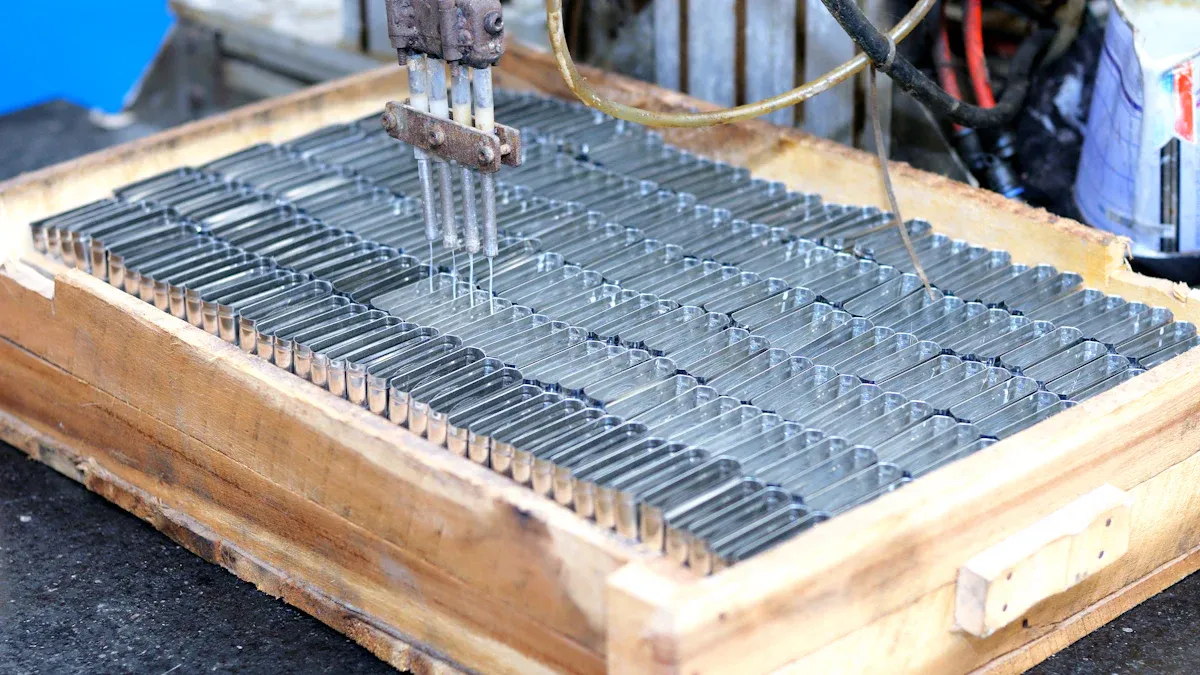
I consider progressive stamping dies to be true game-changers in manufacturing. These multi-station tools perform a series of operations with every press stroke. They transform raw material into a finished part with unmatched efficiency and precision. This method truly streamlines production, significantly reduces costs, and enhances product quality across modern manufacturing. I believe you will find their impact undeniable.
Key Takeaways
- Progressive stamping dies make parts quickly and precisely. They use many tools in one machine. This helps factories save money and make good products.
- These dies work by moving metal through different stations. Each station does a step like cutting or bending. This makes complex parts in one continuous process.
- Progressive stamping dies offer many benefits. They make production faster and cheaper. They also create very accurate and consistent parts.
- While the first cost is high, progressive stamping dies save money over time. They are best for making many parts. They also reduce waste and make the workplace safer.
- Progressive stamping dies are better than other methods for high-volume jobs. They are used in cars, electronics, and medical devices. They help businesses stay competitive.
What is a Progressive Stamping Die?
Defining the Core Concept
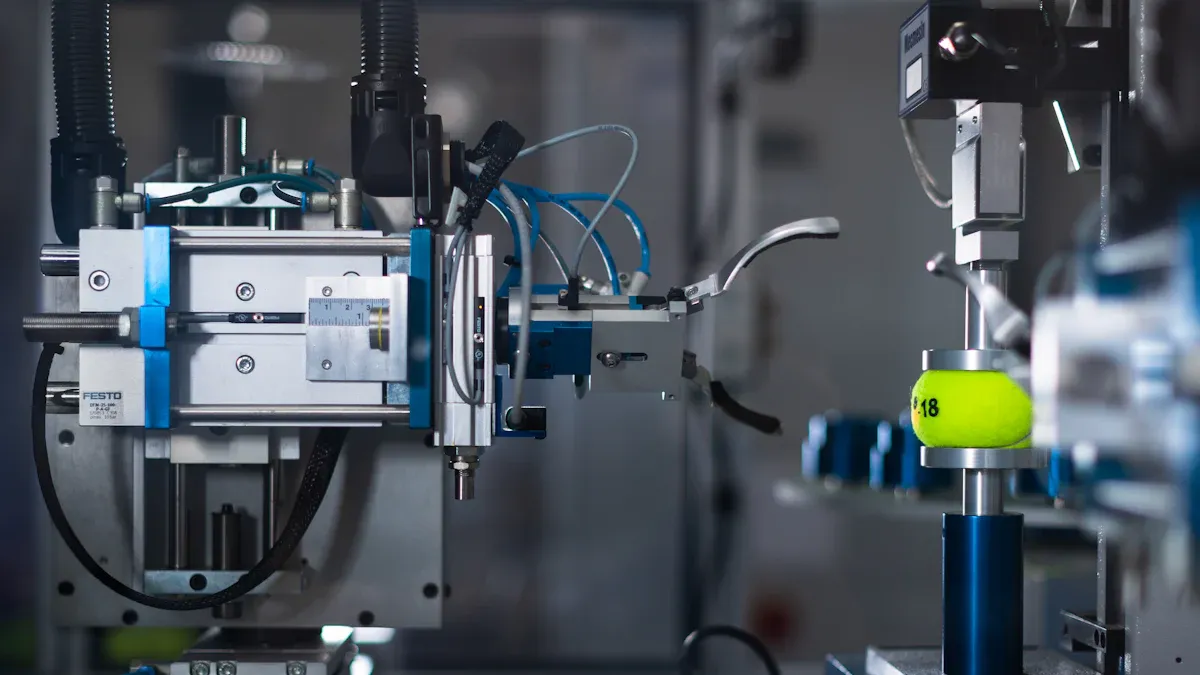
I see a progressive stamping die as a marvel of engineering. It is a multi-station tool. This tool performs a series of operations on a metal strip with each stroke of a press. It transforms raw material into a finished part. This process happens without removing the part from the strip until the very end.
A progressive stamping die relies on specialized tooling. Skilled toolmakers create this die set. It contains all the necessary tools for production. You do not need to change tools between operations. The process also uses powerful stamping presses. Straight side progressive presses are common. A coil feed line carries the material. It moves the material through multiple stamping stations.
The die itself has many crucial components. I find these components fascinating. They work together seamlessly. - Working components directly deform and separate sheet metal. These include punch inserts, die inserts, and punch-matrix parts. - Pilot components control the raw material's feeding direction and pitch. Pilot pins, locating pins, and guide pins ensure accuracy. - Components for material press, stripping, and lifting ensure workpieces and scraps are removed. Stripper plates, lifting pins, and scrap cutting inserts handle this. - Guide components ensure accurate direction. They guide the upper and lower die movement. - Install and fasten components join other parts. They ensure accurate relative positioning. Clamp plates and screws are examples.
Other essential parts include die plates, shoes, and die sets. These form the foundation for mounting working die components. Guide pins and bushings align the upper and lower die shoes precisely. Stripper, pressure, and drawing pads are vital for material handling inside the die. Screws, dowels, and keys secure various components. Spools, shoulder bolts, keepers, and retainers secure pads. Gas, coil, or urethane springs provide pressure and movement for certain components.
How a Progressive Stamping Die Works
I find the operation of a progressive stamping die incredibly clever. It is a continuous, automated process. First, an automatic feeding system pushes a strip of metal. It moves this strip through all the stations of the die. This feeding mechanism advances the stock strip with each press stroke.
Precision is key in this process. The feeding mechanism alone cannot always provide perfect alignment. This is where pilots come in. Bullet-shaped or conical 'pilots' ensure accurate alignment. They enter previously pierced round holes in the strip. This action precisely positions the strip. It compensates for any minor inaccuracies from the feeding system.
The die performs a sequence of operations. These operations cut and form the raw metal sheets. Stamping dies primarily perform two functions: cutting and forming. Common cutting operations include: - Shearing: This produces straight-line cuts. - Blanking: It removes a portion of the metal strip. This creates the workpiece. - Piercing: This creates holes or openings in the material. - Trimming: It removes excess material from the perimeter.
Common forming operations include: - Bending: This curves or shapes the metal along specific axes. - Flanging: It bends the edges of the metal sheet along a curved axis. - Drawing: This pulls the metal into a die cavity. It creates complex shapes. - Stretching: This increases the surface area. It thins and elongates the metal.
Operations are categorized. Category I operations happen before Category II operations. Shearing operations for holes and slots are Category I. All bending operations are Category II. Deform operations have three types. Type I forms a complete feature, like an emboss. Type II needs a pre-operation and has no axis of formation, like a flanged hole. Type III needs a pre-operation and has one or more axes of formation, like a lance.
Rules guide how we group operations. Rule 1 says related operations should happen at one station. Rule 2 suggests combining similar operations to reduce stations. Rule 3 states piloting operations happen at the first station. This ensures positional accuracy. This systematic approach makes the progressive stamping die incredibly efficient.
Unrivaled Benefits of Progressive Stamping Die Technology
I believe progressive stamping die technology offers truly unmatched advantages for manufacturers. These benefits directly translate into better products and stronger bottom lines.
Superior Production Efficiency and Speed
I find the speed and efficiency of progressive stamping dies truly remarkable. They dramatically lower production costs and shorten cycle times. This happens because they allow for continuous, high-volume metal stamping. I see a high level of automation here. This automation minimizes the need for human labor. It also speeds up the entire manufacturing process. This reduces overall manufacturing lead time significantly.
Imagine creating complex parts in one go. Progressive stamping dies do exactly that. They eliminate the need for multiple setups and operations. This streamlines production in a powerful way. For example, a Tier-1 automotive supplier saw amazing results. They cut cycle time by 22% and boosted yield by 10% in just six months. They did this by using optimized strip layouts, balanced station loads, and in-die sensors on their progressive dies. This also meant less maintenance. They saved over $500,000 annually in tooling and labor costs.
I also know that automatic feeding systems are key. They let stamping machines run at high speed with very little downtime. This leads to faster production and more efficient cycle times. The Precision Metalforming Association tells us that optimizing strip layouts can cut raw material usage by up to 15%. The Society of Manufacturing Engineers (SME) also points out that balanced tooling can reduce unplanned downtime by 20%. A 2023 Deloitte survey showed something exciting. Manufacturers using smart tooling, like sensors and automation, reported an average 17% increase in throughput. This shows me the real power of this technology.
Significant Cost Reduction with Progressive Stamping Die
I always look for ways to reduce costs without sacrificing quality. Progressive stamping dies deliver on this promise. Their inherent efficiency directly leads to significant cost savings. Because these systems are highly automated, they require fewer operators. This means lower labor costs for businesses. Proper sensing systems allow progressive die presses to run unattended. This further reduces the number of people needed on the factory floor.
Another big cost saver is the setup time. You only need one setup for progressive die presses. This saves a lot of time compared to other stamping methods. Less setup time means more production time. This directly impacts your bottom line. The ability to create complex parts in a single operation also cuts down on the need for multiple machines and processes. This reduces capital expenditure and operational costs. I see this as a smart investment that pays off quickly.
Enhanced Part Precision and Consistency
When I think about quality, precision and consistency are at the top of my list. Progressive stamping dies excel in both areas. They achieve incredibly tight tolerances. We often talk about 'tight-tolerance' in stamping. This usually means dimensional requirements of 0.001” or tighter on critical features. That is about ±0.0254mm. The precision of EDM machining, which can be 0.001” or tighter, helps make these dies so accurate.
I have seen progressive dies achieve tolerance ranges of up to ±0.01mm. This level of control is amazing. It makes them suitable for parts needing micron precision. This high precision comes from consistent material feeding and alignment throughout the process.
I also value consistency across large production runs. Progressive stamping dies are designed for longevity and minimal maintenance. They offer total repeatability. This makes them perfect for high-volume jobs that demand tight tolerances. They reduce the cost per part. They also ensure consistency. This is vital for repeatable part quality, especially in industries with strict specifications. These dies are built to hold tight clearances and produce clean cuts. They can endure millions of cycles with very little downtime. This ensures reliable performance and consistent parts. These parts are then ready for downstream automation or assembly without issues. I believe this consistent accuracy, tight tolerances, and exceptional repeatability are what set progressive stamping dies apart.
Versatility in Complex Part Manufacturing
I find the adaptability of progressive stamping dies truly impressive. They can produce an astonishing range of complex parts. This technology handles intricate designs and multiple features with tight tolerances. It creates components that would be difficult or impossible with other methods.
Think about the types of features these dies can create. I have seen them produce: * Contacts * Tabs * Clips * Pins * Raised or recessed features, often through debossing or embossing
This versatility extends even further. Progressive stamping dies can perform advanced operations right inside the die. This includes in-die assembly, where multiple pieces come together. They also handle in-die tapping, which means threading holes directly in the die. This capability reduces the need for secondary operations. It saves time and money. I believe this makes them an invaluable tool for manufacturers needing highly specialized components.
Minimized Material Handling and Waste
I always look for ways to make manufacturing more efficient and sustainable. Progressive stamping dies excel in both areas. They significantly minimize material handling and waste. This process is designed for efficient material usage. It ensures the vast majority of material is utilized. This produces less scrap. It offers a cost-effective material option.
The continuous material feed is a key factor. It enables faster production of parts. This leads to the lowest cycle times for high-volume parts. This method efficiently modifies metal. It ensures less scrap. This makes it a more sustainable and cost-effective manufacturing method. I see this as a win-win for both the environment and the bottom line.
Here is how progressive stamping dies achieve this: * Less Scrap Material: The die design specifically minimizes scrap. It saves on material costs. * Conservative Material Use: The process allows for very precise and conservative use of materials. This ensures high-quality parts with minimal waste. * Family Dies: Sometimes, a family die produces different parts simultaneously. This further minimizes material waste and production time.
This efficiency also reduces labor costs through automation. Automation lessens the need for manual intervention. It accelerates production times. The combination of reduced waste, automation, and speed results in significant cost efficiencies. This is especially true for high-volume production. The continuous material feed also facilitates extended production runs. This means fewer material changes and tooling adjustments. It significantly reduces overall production time.
Improved Safety in Operations
I prioritize safety in any manufacturing environment. Progressive stamping dies contribute greatly to a safer workplace. They reduce production hazards and improve worker safety. This is largely due to their high level of automation.
The automated nature of progressive stamping significantly reduces the need for manual labor. This means fewer workers are directly exposed to moving machinery. Personnel can be reallocated to other tasks. This keeps them out of harm's way.
Modern progressive stamping dies also integrate crucial safety features. These include: * Sensors: These detect issues like misfeeds or material buckling. They can stop the press immediately. * Interlocks: These prevent the press from operating if safety guards are not in place.
Better integration of automation also plays a role. Progressive stamping seamlessly integrates with modern automation technologies. This includes robotics and automated handling systems. This boosts production rates. It also reduces worker exposure to manual handling risks. I believe these integrated safety measures make progressive stamping a much safer option for high-volume production.
Progressive Stamping Die vs. Other Stamping Methods
I often compare different stamping methods. This helps me highlight the unique strengths of progressive stamping dies. Each method has its place. However, I believe progressive stamping offers distinct advantages for many manufacturing needs.
Progressive Stamping Die vs. Single-Stage Stamping
I see a clear difference between progressive stamping dies and single-stage stamping. Single-stage tooling is simpler. It performs one operation at a time. This means you need to move the part between different presses or stations for each step.
| Feature / Aspect | Progressive Die Press | Single Stage Press |
|---|---|---|
| Productivity | Very high, best for mass production | Lower, best for small batches |
I find single-stage tooling easy to set up. It has fast lead times. Its structure is simple. Tooling changes are flexible. This makes it good for prototypes. It also works well for pilot runs and small-batch orders. Its production volume is low.
A progressive stamping die is different. It has a quick setup time. However, it requires precision alignment and setup procedures. Once it is running, it excels. It handles long production runs. It produces large quantities of complex parts quickly. It does this simultaneously. I see its production volume as extremely high. It uses fully automated coil feeding. This makes it best for large runs and high-volume production.
| Feature | Single-Stage Die | Progressive Die |
|---|---|---|
| Setup Time | Fast lead times, simple structure, flexible tooling changes | Longer lead time for die manufacturing and setup |
| Production Volume | Low monthly output, ideal for prototypes, pilot runs, and small-batch orders | High monthly output, extremely high production rates with fully automated coil feeding, best for large runs and high-volume production |
Progressive Stamping Die vs. Transfer Dies
I also compare progressive stamping dies with transfer dies. Both are multi-station tools. However, they operate differently. Production with a progressive die is much faster. The semi-finished material moves autonomously through various pressing stations. This optimizes time. It allows multiple parts per stroke.
I find progressive dies more cost-effective for large numbers of products. Transfer dies are more cost-effective for smaller batches. Transfer dies are generally better for producing large parts. Progressive dies are better for producing sets of smaller components.
| Characteristic | Progressive Die Stamping | Transfer Die Stamping |
|---|---|---|
| Speed and Efficiency | High-speed production, ideal for large volumes | Flexible, slower setup and production speed |
| Cost Considerations | High initial tooling cost, cost-effective in large volumes | Higher operational costs, especially for intricate designs |
| Complexity and Part Design | Less suited for complex parts, excellent for simpler designs | Preferred for complex designs, requires precision in die design |
| Volume Suitability | Best for high-volume production | Versatile for both short and long runs, cost varies by complexity and volume |
I believe progressive die stamping is generally the most cost-effective and efficient option for high-volume production runs. Transfer die stamping usually involves higher operational costs. This is especially true for intricate designs and short runs. Progressive die stamping is ideal for less complex parts. These parts need large quantities. Transfer die stamping might be better for more complex parts. This is true for parts needing multiple, sequential operations.
The Competitive Edge of Progressive Stamping Die
I see a clear competitive edge for progressive stamping dies. They are utilized in projects where manufacturers stamp complex or simple parts in large quantities. This method truly shines in specific scenarios.
I recommend progressive stamping for: * High-volume production runs. This is especially true for lamination stamping projects. It offers lower per-piece expenses. This comes from rapid throughput and reduced labor/operational overhead. * Projects needing consistent quality and precision over high production runs. It minimizes variation between parts. It maintains critical tolerances. * Manufacturing complex parts. It consolidates multiple operations. This includes punching, notching, and forming. It does this into a single, continuous process. * Industries with fluctuating demand or multiple product models. It offers scalability and flexibility. It adjusts production with moderate tooling modifications. * The automotive sector. This is particularly true for hybrid and electric vehicles. They need large volumes of consistent and precise laminations. This ensures efficient motors. * Industrial motors. These operate under heavy loads or extended run times. Tight tolerances and long-term durability are crucial here.
I know the initial tooling investment can be higher than simpler methods. However, progressive stamping die technology offers significant long-term financial benefits for high-volume projects. It achieves this through optimized material utilization. It also reduces scrap. It streamlines the workflow. I believe it stands out as a balanced approach for large-scale requirements. It maintains consistency and cost-effectiveness. Other lamination stamping methods might require individual setups for each task.
Key Considerations for Implementing Progressive Stamping Die
I believe understanding the key factors for implementing this powerful technology is crucial. You must consider the initial costs, design complexities, and material choices carefully.
Initial Investment and Return on Investment
I know the initial investment for progressive stamping dies can seem high. Tooling costs often reach tens of thousands of dollars. For example, a project might have a $50,000 tooling charge. This is much higher than the $75 to $2,000 for short-run stamping. A continuous die for auto parts, measuring 400W*1000L, can cost around $20,000 per set. Complex dies can even exceed $100,000. Large automotive dies might range from $150,000 to $300,000 each.
However, I see a strong return on investment (ROI) over time. This comes from low per-piece costs in long production runs. You must calculate the break-even point to see when this method becomes more cost-effective. Factors like the die's productive life and good maintenance extend its use. Design for Manufacturability (DFM) also helps. It considers material choice and tolerance. Rapid production rates, low part cost at high volumes, and reduced scrap all boost your ROI.
Design and Tooling Complexity
I find the design and tooling of these dies quite complex. Choosing the right material is critical. Its thickness, hardness, and ductility all impact the process. Tool wear is another challenge. Constant contact between metal and die reduces quality. Poor die design or maintenance leads to inconsistent parts. Springback, where the material returns to its original shape, causes inaccuracies. Achieving tight tolerances and consistent quality for complex parts is also hard. Material fracture and cracking can occur, especially with high strain hardening rates. Managing scrap material is a costly aspect. Balancing high production speeds with quality is an ongoing challenge.
Material Suitability and Selection
I always emphasize choosing the right material. This choice directly impacts the success of your stamping operation.
Here are some materials I often recommend: * Stainless Steel: It offers great corrosion resistance and strength. I see it in medical devices and food processing. * Carbon Steel: This material is durable and strong. It is also cost-effective. * Beryllium Copper: I use this for high-stress parts like springs. It resists corrosion and conducts well. * Copper: This soft, malleable metal resists corrosion. It works well in food processing. * Brass: This versatile alloy is good for bearings and electrical components. It conducts heat and electricity. * Aluminum: It is lightweight and strong. I use it for aerospace parts and electronics.
You must also consider key material properties. Formability means the material can bend without cracking. Ductility allows it to stretch without breaking. Yield strength tells you when it starts to deform. Tensile strength shows how much stress it can handle before breaking. Other factors like strength, conductivity, corrosion resistance, and cost are also important.
Applications of Progressive Stamping Die Across Industries
Where Progressive Stamping Die Shines
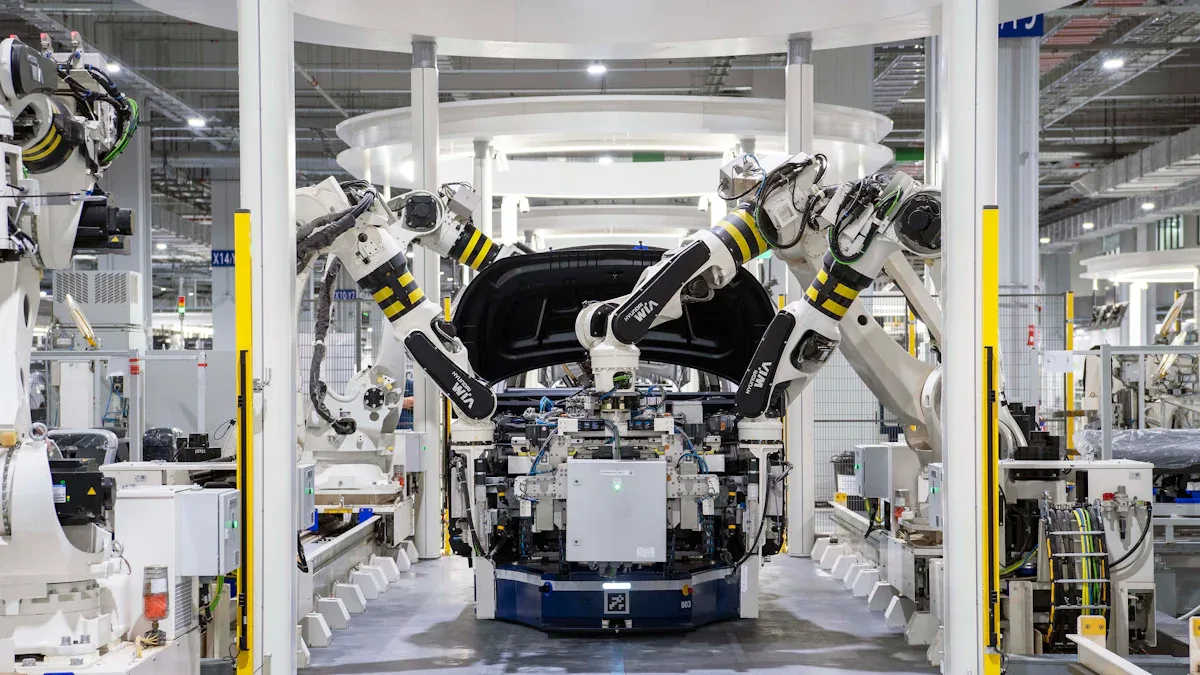
I often see progressive stamping dies making a huge difference in many industries. They truly shine where precision and high volume are critical. I find them essential in the automotive industry for body panels, structural components, and electrical connectors. In electronics, I see them creating connectors, terminals, and heat sinks. The aerospace industry relies on them for structural components and fasteners. For consumer goods, I know they produce appliance parts and hardware. Finally, industrial equipment uses them for hydraulic systems and electrical switchgear. This technology is also vital in medical devices for surgical instruments and implantable devices, and in renewable energy for solar panel and wind turbine components. I believe this wide range shows their incredible versatility and impact.
Real-World Impact and Examples
I have seen progressive stamping dies create many specific product components. They produce busbars, lead frames, shields, and various terminals. They also make wire and cable connectors, compression limiters, and fuse clips. I have even seen them create lighting components, press-fit pins, and sensor components. This technology is truly amazing for its ability to produce such a diverse array of parts.
I also know of some great examples that show their real-world impact. For instance, one project involved managing material thinning in lightweight aluminum automotive components. We used digital simulations to refine the die design. This reduced material failure and ensured robust products. Another time, a consumer electronics manufacturer had issues with excessive stamping press tonnage. We solved this by staggering punches within the die setup. This distributed the force better. It allowed them to use existing machinery without losing part quality. I also remember a project for an Aqua Lung SCUBA diving part. We created a crucial D-ring component. Advanced design significantly reduced material waste. It cut costs by using raw material twice as efficiently. These examples show me the power and innovation progressive stamping dies bring to manufacturing.
I truly believe progressive stamping dies are essential for modern manufacturing. They offer unmatched efficiency, save money, and provide incredible precision. This technology drives innovation. It helps businesses stay competitive in today's tough market. Manufacturers should use this powerful tool. It will bring them the best results and help them grow.