





news
How Precision Die and Stamping Boost Manufacturing Efficiency

I believe precision die and stamping play a vital role in boosting manufacturing efficiency. These advanced techniques streamline production processes and significantly reduce waste. For instance, precision stamping reduces excess material usage, which leads to cost savings. Additionally, the consistency and repeatability of these methods minimize errors, improving overall product quality. As industries demand high-volume production of complex metal components, the advantages of precision die and stamping become even more apparent.
Key Takeaways
- Precision die and stamping streamline production processes, reducing waste and saving costs.
- Automation and real-time monitoring enhance efficiency, ensuring high-quality output with minimal errors.
- These techniques are crucial across industries, including automotive, electronics, and aerospace, improving product reliability and safety.
- Investing in precision die and stamping technologies leads to significant long-term savings and improved operational efficiency.
- Adopting best practices in material selection and maintenance can maximize the benefits of precision die and stamping.
Fundamentals of Precision Die and Stamping
Definition and Process Overview
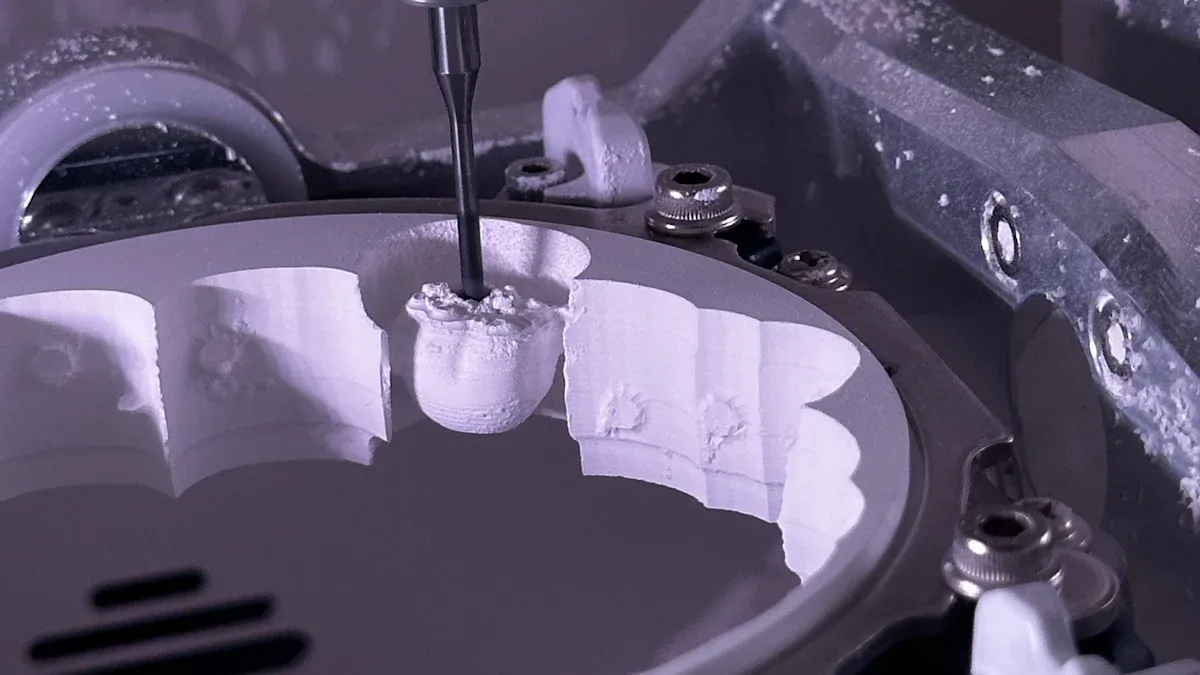
Precision die and stamping are essential techniques in modern manufacturing. I define precision die as a specialized tool used in stamping presses. It cuts, shapes, or forms flat sheet metal into desired shapes with high accuracy and repeatability. Stamping, on the other hand, involves placing flat sheet metal into a stamping press. The press shapes the metal using various techniques like punching, blanking, and bending.
The process of precision die and stamping consists of several key steps:
- Pressing a metal sheet between a die and a punch to create parts with precise specifications.
- Utilizing precision-engineered dies as molds and punches to apply necessary force for bending, cutting, and shaping metal.
- Employing specialized computerized and automated equipment to ensure minimal variation in production.
This structured approach allows manufacturers to produce parts with tight tolerances, ensuring minimal variation and high-quality results. It also enables high-volume production with consistent quality across runs, which is crucial for meeting market demands.
Key Technologies Involved
Several technologies enhance the effectiveness of precision die and stamping. For instance, the integration of sensors and IoT technology enables real-time monitoring of stamping dies. These sensors track critical variables such as alignment, temperature, and force during operation. This monitoring helps prevent dimensional inaccuracies, which can lead to faulty production.
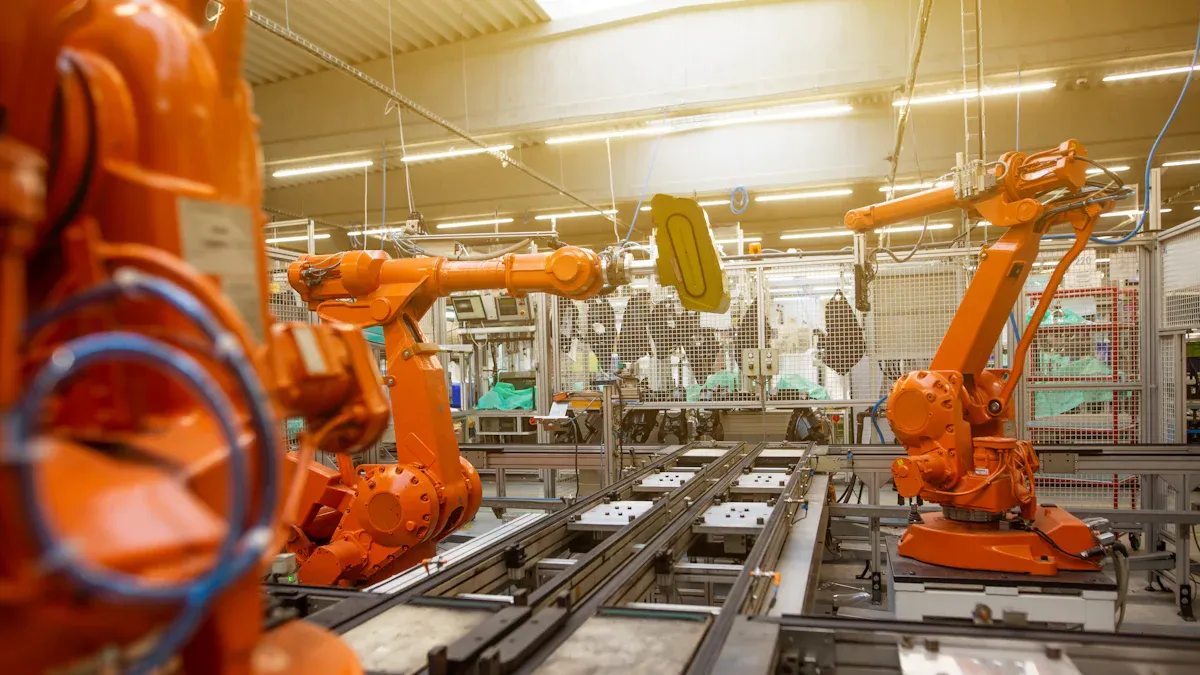
Moreover, advancements like AI-powered quality control automate inspections and detect errors in real time. This reduces waste and rework, ensuring that the final products meet strict quality standards. Robotics and automation further improve efficiency by ensuring perfect alignment and minimal part variation during high-speed operations.
Applications of Precision Die and Stamping Across Industries
Automotive Industry
In the automotive industry, precision die and stamping play a crucial role in enhancing the performance of various components. I have seen firsthand how these techniques improve repeatability and dependability in production. For example, they significantly reduce variability in manufacturing components like gears and brackets. This reduction minimizes the risk of misfitting or mechanical failures, which can be detrimental to vehicle safety.
- Precision die and stamping allow for the creation of intricate shapes that enhance functionality. This includes improved load distribution and heat dissipation in exhaust systems.
- Modern computer-aided design software enables the production of highly precise die designs. This advancement reduces production defects and ensures that each component meets strict quality standards.
- Automated stamping machines equipped with sensors and real-time monitoring enhance manufacturing efficiency and reliability. This technology allows manufacturers to produce high volumes of components quickly, leading to a 25% increase in operational efficiency.
Electronics Manufacturing
The electronics manufacturing sector relies heavily on precision die and stamping due to its ability to produce very small metal parts with high accuracy and repeatability. I find it fascinating how these processes are essential for components in devices we use daily. For instance, precision die and stamping are critical for:
- Cameras
- Cleaning appliances and robots
- Computer electronics
- Connected audio devices
- Handheld AR devices
- Head-up displays
- Heating and cooling devices
- Kitchen appliances
- Lights
- Smart plugs and power strips
One notable example is IBM’s PowerPC, which utilized billions of accurately stamped edge clips. This demonstrates the necessity of precision in ensuring that even components with a tiny 0.5-millimeter pitch are formed flawlessly. As consumer electronics continue to demand miniaturized, intricate components, the need for ultra-precise dies capable of high-volume, consistent output becomes even more pressing.
Aerospace Sector
In the aerospace sector, precision die and stamping are indispensable for meeting the industry's unique challenges. I have observed how these methods enhance manufacturing efficiency, which is vital for timely production. The benefits include:
- Efficiency and Speed: Precision stamping enhances manufacturing efficiency, allowing for timely production of critical components.
- Cost Efficiency: This method reduces startup costs, enabling aerospace manufacturers to manage budgets effectively while producing high-quality components.
- Material Waste Reduction: Precision stamping minimizes waste, which is essential in aerospace manufacturing to meet both economic and environmental standards.
- Product Uniformity: The ability to produce uniform components simplifies assembly and quality control, critical in aerospace applications.
- Complex Geometry: Precision stamping can create intricate designs needed for advanced aerospace components, meeting the industry's evolving demands.
Die cutting produces parts at scale, making it a cost-effective solution essential for high-volume aerospace manufacturing. Enhanced system performance and uncompromised reliability are crucial for safety and regulatory compliance. By adhering to industry standards, manufacturers can mitigate the risks of mechanical breakdowns and accidents, ensuring that aircraft operate safely and efficiently.
Benefits of Precision Die and Stamping
Cost Reduction Strategies
I have seen firsthand how precision die and stamping can lead to significant cost savings in manufacturing. These techniques streamline production processes and minimize waste, which directly impacts the bottom line. For instance, by reducing the number of rework iterations, manufacturers can save substantial amounts of money.
Consider the following table that illustrates the total rework costs associated with different panel types:
| Panel Type | Operations | Rework Iterations | Cost per Iteration | Total Rework Cost |
|---|---|---|---|---|
| Medium-sized reinforcement | 4 | 4 (commonly 7+) | $25,000 | $100,000 (minimum) |
| Hood inners / outers | 4 | 4 | $50,000 | $200,000 |
| Body side panels | 5 | 4 | $125,000 | $500,000 |
As I analyze this data, it becomes clear that reducing rework not only saves money but also enhances overall efficiency. By implementing precision die and stamping, manufacturers can achieve a lower total cost of ownership (TCO). This includes maintenance, repair expenses, and operational downtime impacts.
To calculate return on investment (ROI), I recommend using the formula: Net Profit / Total Investment x 100 = ROI. For example, if a manufacturer generates $50,000 in net profit annually from precision die and stamping equipment that costs $200,000, the ROI would be 25%. This kind of analysis shows how investing in these technologies pays off.
Quality Improvement Techniques
Quality is paramount in manufacturing, and precision die and stamping excel in this area. I have witnessed how these methods enhance product quality through various techniques. For instance, computer-aided design (CAD) and manufacturing (CAM) allow for precise dimensional accuracy and reduced cycle times.
Here’s a table that outlines some quality improvement techniques and the metrics used to evaluate their success:
| Quality Improvement Technique | Metrics Used to Evaluate Success |
|---|---|
| Computer-aided design (CAD) and manufacturing (CAM) | Dimensional accuracy, cycle time |
| Real-time monitoring systems | Yield rate, defect rate |
| Regular inspections and rigorous testing | Material strength, surface finish |
| Real-time data acquisition systems | Cycle time, yield rate |
| Automated feedback loops | Dimensional accuracy, defect rate |
| Statistical process control (SPC) | Yield rate, cycle time |
By employing real-time monitoring systems, manufacturers can track yield rates and defect rates, ensuring that they produce high-quality parts consistently. I have noticed that the adoption of precision die and stamping leads to fewer defects and better part fit compared to traditional methods. Over time, these improvements result in lower waste and cost savings in mass production.
Speeding Up Production Times
One of the most compelling benefits of precision die and stamping is the ability to speed up production times. I have observed that these processes allow for high-volume production of complex parts, which is essential in today’s fast-paced market.
Here are some key points that highlight how precision die and stamping enhance production speed:
- Precision metal stamping utilizes advanced computer modeling to optimize designs before manufacturing.
- The automation of the stamping process leads to faster operations and reduced labor costs.
- High-precision stamping in one stroke ensures tight tolerances, which is crucial for industries like aerospace and automotive.
Moreover, servo presses operate at high speeds with precise control, significantly reducing production time. This technology allows for quicker turnaround times compared to traditional machining processes. The ability to quickly retool production lines enables manufacturers to adapt to market changes efficiently.
Technological Advancements in Precision Die and Stamping
Automation in Die and Stamping
I have witnessed firsthand how automation revolutionizes precision die and stamping. Recent advancements include robotics, CNC machines, IoT devices, and AI-driven systems. These technologies significantly enhance manufacturing efficiency by:
- Reducing cycle times and accidents through robotics.
- Providing high precision and flexibility with CNC machines.
- Allowing for real-time monitoring and data collection via IoT devices.
- Enhancing decision-making and predictive maintenance through AI systems.
The evolution of automation has transitioned from mechanical presses to sophisticated servo-controlled systems. Servo technology allows for precise control of die travel, which improves product quality and optimizes process efficiency. Additionally, automated feeding systems enhance material accuracy, reducing downtime and increasing productivity.
The integration of quick die-change (QDC) systems reduces downtime during the changeover of stamping dies, substantially increasing capacity for high-volume stamping runs.
Innovations in Materials
Innovations in materials have also played a crucial role in improving the efficiency of precision die and stamping. I find it fascinating how new materials outperform traditional options. For instance, cold-rolled steel offers:
- Smooth finished surfaces
- Precise edges and flatness
- Greater strength and hardness
Titanium stands out due to its high strength-to-weight ratio and corrosion resistance, making it ideal for aerospace and medical applications. Stainless steel can withstand higher temperatures and is more resistant to corrosive environments compared to aluminum.
Moreover, advanced materials like carbide and tool steel alloys enhance durability and wear resistance. This leads to longer tool life and reduced maintenance, which ultimately lowers production costs. High-strength materials and coatings have been developed to extend the life of dies, minimizing downtime and maintenance expenses.
Case Studies of Precision Die and Stamping
Success Stories from Leading Manufacturers
I have seen remarkable success stories from various manufacturers that highlight the benefits of precision die and stamping. For instance, Presidio Components produces parts used in NASA's Mars rovers. Their components demonstrate reliability in critical applications, showcasing how precision stamping can meet the highest standards.
Another inspiring example is IDev Technologies, which developed a tiny metal stent activator crucial for FDA approval. This project illustrates the precision required in medical device manufacturing. Additionally, an automotive resistor manufacturer achieved a flatness variance of less than 0.008 inches in stamped metal plates. This level of precision ensures high quality in automotive applications.
Moreover, a project for a military contractor improved reliability and production efficiency for high-performance jets by integrating assembly with stamping processes. These examples clearly show how precision die and stamping can lead to significant advancements across various industries.
Lessons Learned and Best Practices
From my observations, manufacturers have learned valuable lessons while implementing precision die and stamping technologies. Here are some best practices that emerged:
| Challenge | Solution |
|---|---|
| Material Selection | Collaborate closely with material suppliers and engineers to choose the most suitable materials. |
| Tool Wear | Regular maintenance and tool sharpening can extend the life of stamping dies. |
| Die Design and Maintenance | Invest in high-quality dies and establish a proactive maintenance schedule. |
| Tolerance and Quality Control | Implement a robust quality control system with regular inspections and statistical process control (SPC) techniques. |
Additionally, I have found that understanding the role of metal stamping education can significantly improve outcomes. Improving layout and maintenance for metal stamping enhances efficiency and safety. Automating metal stamping processes also leads to better quality control.
These lessons and best practices not only help manufacturers overcome challenges but also pave the way for continuous improvement in efficiency, cost management, and product quality. By adopting these strategies, companies can maximize the benefits of precision die and stamping in their operations.
Precision die and stamping are essential for modern manufacturing. I have seen how these techniques significantly improve efficiency, reduce costs, and enhance product quality. For instance, stamping dies ensure dimensional accuracy and quality control, while regular maintenance can cut downtime by 30%. As industries focus on lightweight parts and embrace automation, the role of precision die and stamping will only grow. Adopting these methods positions manufacturers to thrive in a competitive landscape.