





news
Discovering the Impact of All Metal Stamping on Production Efficiency
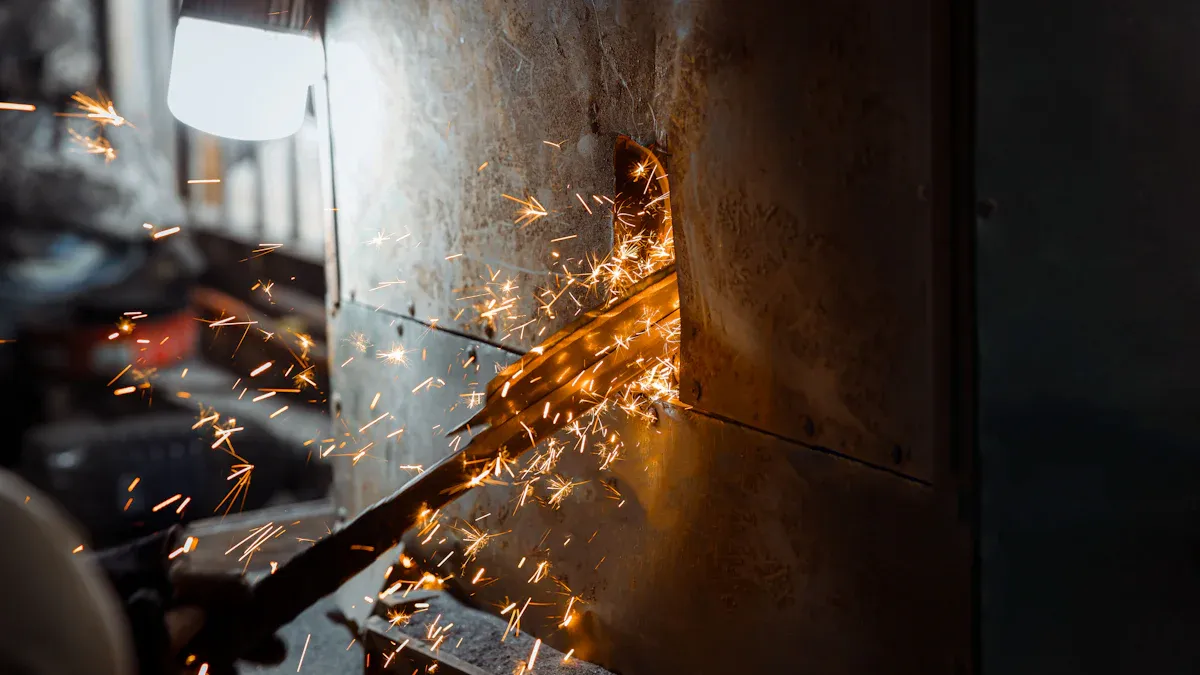
All metal stamping plays a crucial role in modern manufacturing. I see it as a game changer, driving production efficiency across various sectors. By integrating Industry 4.0 technologies, all metal stamping enhances equipment performance and operational efficiency. Predictive maintenance helps reduce unexpected downtime, while data analytics identifies inefficiencies. These advancements not only optimize resource allocation but also streamline processes, significantly improving workflow efficiency. The transformative effects of all metal stamping are evident in industries like automotive, aerospace, and electronics.
Key Takeaways
- All metal stamping boosts production efficiency by streamlining processes and reducing downtime.
- Investing in early prototypes helps identify issues, leading to significant cost savings in manufacturing.
- Advanced technologies like automation and robotics enhance precision and quality in stamped products.
- Sustainable practices in metal stamping reduce environmental impact and promote a circular economy.
- Embracing innovations in materials and processes keeps manufacturers competitive in a rapidly changing market.
Understanding All Metal Stamping

Definition of All Metal Stamping
All metal stamping is a vital manufacturing process that shapes and forms metal sheets into various products and components. I find it fascinating how this technique is essential in creating items we use daily, such as machines, tools, vehicles, and household appliances. Here are some common definitions I’ve come across in industrial literature:
- Metal stamping shapes metal sheets into products.
- It plays a crucial role in modern industrial manufacturing.
- Spinning, a related process, forms metal into circular parts.
These definitions highlight the versatility and importance of all metal stamping in our lives.
Types of All Metal Stamping Techniques
The world of all metal stamping is diverse, featuring several techniques that cater to different manufacturing needs. Here are some primary types I believe are worth noting:
- Blanking: Cutting out a workpiece from a sheet.
- Punching: Creating holes in the metal.
- Bending: Shaping the metal into profiles.
- Flanging: Adding a flare to the edges.
- Embossing: Creating designs on the surface.
- Coining: Producing precise bends.
Additionally, advanced methods like progressive die stamping and transfer die stamping involve multiple stamping stations, enhancing efficiency. Four-slide stamping is perfect for complex shapes, while fine blanking is known for its precision and smooth edges. Each technique contributes uniquely to the production process, making all metal stamping a cornerstone of modern manufacturing.
Benefits of All Metal Stamping
Increased Productivity
I have seen firsthand how all metal stamping significantly boosts productivity in manufacturing. By streamlining processes, companies can produce more parts in less time. For instance, I learned that Ford's South African stamping plant processes an impressive 272 tons of steel over three shifts at full capacity. This showcases how automation can lead to remarkable production output.
Here are some methods that improve productivity in all metal stamping:
| Method of Improvement | Description |
|---|---|
| Removing Bottlenecks | Identifying and eliminating roadblocks in the stamping process enhances efficiency. |
| Reducing Rejection Rates | Streamlining processes minimizes defects and unnecessary costs associated with rejected parts. |
| Implementing Quality Control | Establishing a meticulous quality control team catches defects early, saving time and costs. |
| Utilizing Automation | Employing machines maintains production cycles without fatigue, allowing for higher output. |
| Employing Latest Design Tools | Using advanced software for prototyping saves time and improves design accuracy. |
These strategies not only increase output but also ensure that the production process runs smoothly.
Cost Efficiency
Cost efficiency is another significant advantage of all metal stamping. I have observed that investing in early prototypes helps identify potential issues before they become costly problems. This proactive approach saves money in the long run. Here are some ways all metal stamping contributes to cost savings:
- Material Costs: Smart material selection can yield significant savings, especially when optimizing for thickness and grade.
- Design Optimization: Simplifying part geometries and standardizing components lowers tooling costs and speeds up production.
- Material Efficiency: Reducing scrap through optimized layouts can significantly cut costs.
- Tooling and Die Efficiency: Efficient tooling design minimizes upfront investment and ongoing maintenance expenses.
By focusing on these areas, manufacturers can achieve substantial cost reductions while maintaining high-quality standards.
Enhanced Precision and Quality
In my experience, all metal stamping enhances precision and quality in manufactured products. The use of advanced technologies ensures that parts meet strict specifications. For example, AI-powered quality control automates inspections and detects errors in real time, reducing waste and rework. Here are some key factors that contribute to enhanced precision and quality:
- IIoT-Enabled Presses: These synchronize movements for high-speed operations and precision placement, allowing for real-time adjustments and error detection.
- Robotics and Automation: They ensure perfect alignment in material handling, minimizing part variation even at high speeds.
- Quick Die Change Systems: These reduce downtime and manual labor in changing tooling, enhancing efficiency.
- 3D Modeling: This analyzes dimensions and tolerances before production, helping to identify issues early.
With these advancements, manufacturers can produce high-quality components that meet customer demands consistently.
Real-World Applications of All Metal Stamping

Automotive Industry
In my experience, the automotive industry heavily relies on all metal stamping for various components. This process allows manufacturers to create parts that are both durable and lightweight, essential for vehicle performance. I find it impressive how metal stamping contributes to the production of critical automotive components. Here are some key applications I’ve observed:
- Floor mat securement brackets
- Horn buttons
- Rearview mirror mounting plates
- Steering wheel components and brakes
- Fuel injectors
- Seat latches
These components play vital roles in vehicle functionality and safety. Additionally, all metal stamping is crucial for producing body panels, chassis parts, and various brackets. The efficiency of this process helps manufacturers meet the high demand for vehicles while maintaining quality standards.
Aerospace Sector
The aerospace sector also benefits significantly from all metal stamping. I have seen how this technique allows manufacturers to work with high-quality metals like steel, aluminum, and titanium. These materials are essential for ensuring durability and functionality in aviation projects. Here are some applications I find noteworthy:
- Relays and switches
- Pressurization systems and oxygen generation
- Instruments like altimeters and fuel gauges
- Control systems such as rudders and flaps
- Fuel systems including tanks and pumps
The precision achieved through all metal stamping leads to high consistency and quality in aerospace products. I appreciate how this efficiency ensures 100% accuracy in production processes, ultimately enhancing safety in aviation.
Electronics Manufacturing
In the electronics manufacturing sector, all metal stamping plays a crucial role in producing components for various devices. I have noticed that this process is used in everything from cameras to kitchen appliances. Here’s a table summarizing the applications and benefits of all metal stamping in this field:
| Application/Benefit | Description |
|---|---|
| Applications of Metal Stamping | Used in components for cameras, cleaning appliances, computer electronics, connected audio devices, handheld AR devices, head-up displays, heating and cooling devices, kitchen appliances, lights, smart plugs, and power strips. |
| Key Benefits of Metal Stamping | 1. Cost-efficiency: Fast processing and less labor. 2. Consistent accuracy and quality. 3. Reduced human error through automation. 4. Versatility with various materials. |
I find it fascinating how all metal stamping not only enhances production efficiency but also contributes to miniaturization and precision in electronics. The ability to produce parts quickly and with less waste leads to significant cost savings and improved durability.
Innovations in All Metal Stamping
Automation and Robotics
I have witnessed firsthand how automation and robotics have revolutionized all metal stamping. These technologies streamline production processes, leading to optimal efficiency. For instance, robotic arms handle materials with precision, reducing human error and speeding up the assembly process. This integration has minimized manual labor, allowing workers to focus on more complex tasks. The impact is significant; I learned that companies can reduce labor costs by up to 80% while increasing productivity by 30%.
Here are some key innovations in automation and robotics that I find impressive:
| Innovation Type | Description |
|---|---|
| AI-Powered Quality Control | Automates quality inspections using machine learning and computer vision to detect errors in real time. |
| IIoT-Enabled Presses | Synchronizes movements for high-speed operations and monitors tool wear and press tonnage. |
| Quick Die Change Systems | Enables rapid tool changeover, reducing downtime and manual labor. |
Advanced Materials
The use of advanced materials in all metal stamping has transformed product performance. I have seen how high-tensile-strength alloys and galvanized steel enhance durability while reducing material waste. These materials not only improve the longevity of stamped products but also contribute to cost efficiency. For example, titanium is lightweight and corrosion-resistant, making it ideal for aerospace applications.
Here’s a quick overview of some advanced materials I find noteworthy:
| Material Type | Benefits |
|---|---|
| High-tensile-strength alloys | Reduced material waste, enhanced product longevity, improved cost efficiency |
| Galvanized steel | Good long-wear use, hardness, and strength |
| Titanium | Lightweight, corrosion-resistant, high strength, and ductility |
Sustainable Practices
Sustainability is becoming a key focus in all metal stamping. I appreciate how manufacturers are adopting practices that reduce environmental impact. For instance, many companies now implement energy-efficient processes and use recyclable materials. This shift not only lowers the carbon footprint but also promotes a circular economy.
Here are some sustainable practices I find particularly impactful:
| Sustainable Practice | Description |
|---|---|
| Process Optimization | Utilizes simulation software to fine-tune stamping processes, reducing energy waste and improving efficiency. |
| Circular Material Flows | Designs parts for recyclability, creating a closed-loop lifecycle to minimize waste. |
| Eco-Friendly Lubrication | Uses bio-based lubricants to lower emissions and facilitate easier recycling. |
By embracing these innovations, the all metal stamping industry is not only enhancing production efficiency but also paving the way for a more sustainable future. I believe that these advancements will continue to shape the industry, making it more efficient and environmentally friendly.
In summary, all metal stamping significantly enhances production efficiency through various means. Here are the key points I want to highlight:
| Key Point | Description |
|---|---|
| Cost Efficiency | Metal stamping reduces processing time and allows for bulk ordering, leading to cost savings. |
| Consistency in Quality | The process ensures minimal variations, resulting in high-quality precision components. |
| Efficient Production | Capable of producing a large quantity of parts quickly, enhancing overall production efficiency. |
| Reduction of Scrap Material | Effective die design and planning minimize waste during production. |
I believe that all metal stamping plays a critical role in modern manufacturing. It not only boosts productivity but also ensures high-quality outputs. Looking ahead, I see exciting trends like automation, sustainable practices, and advanced materials shaping the future of this industry. Embracing these innovations will keep manufacturers competitive and responsive to market demands. ?