





news
Chassis Components Explained Your Car's Foundation
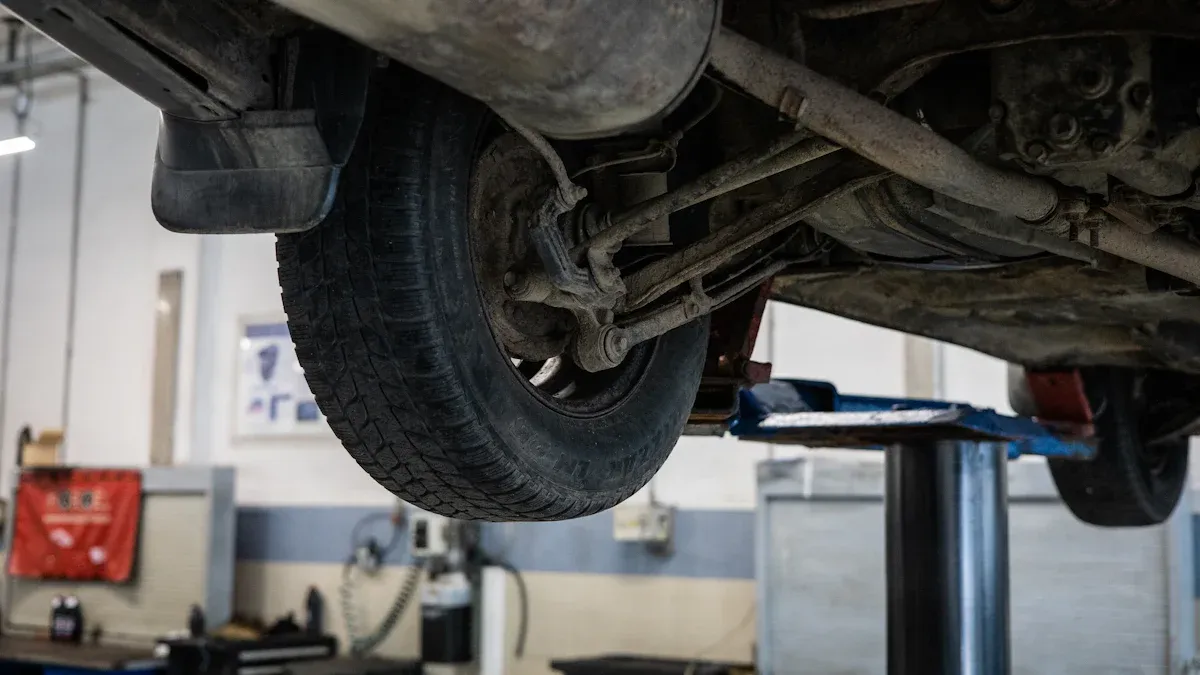
I believe understanding your car's foundation is crucial. The essential structural framework of your vehicle, its chassis, truly dictates its performance and safety. Effective maintenance of these vital chassis components significantly extends a vehicle's economic service life. For example, preventive care can push a chassis's lifespan from 18 years to 25 or even 30 years. This practice delays expensive new vehicle purchases. It also ensures consistent goods movement for businesses, preventing significant financial losses from supply chain disruptions.
Key Takeaways
- The car's chassis is its main support. It holds all parts together. It helps the car move, stop, and stay safe.
- The chassis has many important parts. These include the frame, suspension, steering, and brakes. Each part helps the car work well.
- Different chassis designs exist. Each design has its own strengths. They affect how a car drives and how safe it is.
- A strong chassis keeps you safe. It helps the car handle well. It also makes your ride comfortable.
- Regular care of your chassis is important. Check for rust and keep your tires good. This makes your car last longer and drive better.
What Defines a Car Chassis?
I want you to understand the true heart of your vehicle. The chassis is not just a collection of parts; it is the very foundation that makes your car a cohesive, functional machine. I see it as the unsung hero, working tirelessly beneath the surface.
The Vehicle's Structural Backbone
I believe the chassis is your car's structural backbone. It provides the essential support and rigidity that every other part relies on. Think of it this way: my car's chassis includes strong frame rails, which are long, parallel beams running along the sides. These rails are the primary load-bearing components, giving the car its rigidity and stability. Crossmembers then connect these frame rails, adding even more support and stability. They also hold important parts like the transmission and suspension.
My chassis also serves as a stable base for the suspension system. This system connects the tires, shock absorbers, springs, and linkages to the wheels. It ensures stable road interaction and smooth handling. A rigid chassis prevents unwanted flexing. This flexing can act like an unpredictable "fifth spring" in the suspension, causing delayed steering response and reduced cornering ability. By minimizing this flex, the suspension works more efficiently. It keeps the tires firmly on the road, improving overall handling, driver control, and safety. I know the chassis holds everything together, from the engine to the drivetrain, and even the wheels. It truly is the main support structure for all other chassis components.
Core Functions of the Chassis System
Beyond just holding parts, my chassis performs several critical functions. I see it as the central nervous system of the vehicle.
- Support Different Car Components: The chassis acts as a foundation for essential components. This includes the engine, transmission, suspension, and steering system. It ensures they are attached and work together cohesively.
- Balance Car Structure: It distributes the vehicle's weight evenly. This enhances stability during driving, especially when turning, braking, or accelerating. This helps prevent rollovers and improves control.
- Vehicle Structural Integrity: The chassis maintains the vehicle's structural integrity. It withstands forces like twisting, bending, and shearing. This prevents deformation under stress and avoids handling issues.
- Point of Attachment for Other Components: It serves as a secure attachment point for various systems. This includes the suspension, fuel tank, exhaust, and powertrain. It can endure vibrations and impacts.
- Absorb and Distribute Crash Energy: Modern chassis designs include crumple zones. These zones absorb and distribute crash energy. They protect occupants by reducing impact forces transferred to the cabin.
I also know the chassis system plays a vital role in how my car moves and stops.
- Transmission System: This system transmits power from the engine to the driving wheels. It enables the vehicle's movement.
- Running System: It supports the vehicle's weight. It absorbs road shocks and dampens vibrations. It also transmits forces and torques between the engine and the road surface, ensuring smooth and stable driving.
- Steering System: Its function is to change or restore the vehicle’s direction. It allows my car to follow my intended path.
- Braking System: This system slows down or stops the vehicle. It also helps maintain stability, especially on slopes.
I believe the chassis is crucial for stability, safety, and performance. It distributes and absorbs forces during acceleration, braking, and maneuvering. It also protects occupants in a collision by absorbing and redirecting impact forces away from the passenger compartment.
Key Chassis Components Explored
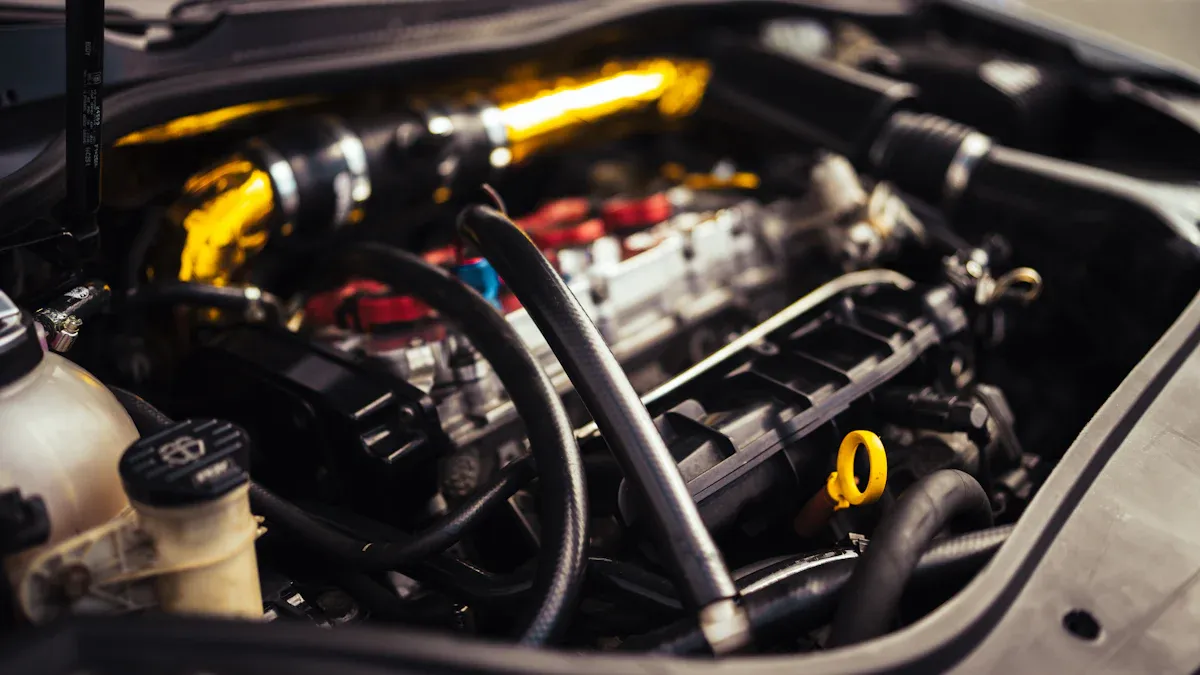
I want to dive deeper into the specific parts that make up your car's foundation. Understanding these individual chassis components helps you appreciate the engineering behind your vehicle. It also shows you why proper maintenance is so important.
Vehicle Frame
I see the vehicle frame as the skeleton of your car. It provides the main structure. This frame supports everything else. Different cars use different frame designs. Each design has its own strengths.
For example, some high-performance cars use a space frame. This design is amazing. It uses tubular steel, alloy, or even carbon fiber. These materials create a strong, three-dimensional skeleton. This design makes the car very stiff. It also keeps the weight low. Engineers often use triangles in these frames. Triangles are very strong shapes. They handle forces well. This design allows for minimal weight. Cars like the Jaguar C-Type and Mercedes-Benz 300 SL used this type of frame. Audi also developed its 'Audi Space Frame' for cars like the Audi A8. This shows how advanced frame technology can be. A strong frame means a safer, more responsive car for you.
Suspension System
I believe the suspension system is crucial for both your comfort and your car's handling. It connects your car to its wheels. This system absorbs bumps and keeps your tires on the road.
Let me tell you about the main parts of this system: * Springs: These are the first line of defense. They absorb road shocks. They compress and expand over bumps. This cushions your ride. You might find coil springs, leaf springs, or even torsion bars. * Shock absorbers (dampers): These work with the springs. They control wheel motion. They stop your car from bouncing too much. They make your ride smooth. * Struts: These are like a combination of a spring and a shock absorber. They support the car's weight. You often find them in the front suspension. They give both damping and structural support. * Control arms: These connect the car's frame to the wheels. They control how the wheels move up and down. * Ball joints: These are small, round bearings. They connect control arms to steering parts. They allow for smooth steering. * Tie rods: These connect the steering system to the wheels. They help turn the wheels. * Sway bars (anti-roll bars): These reduce how much your car leans in turns. They improve handling stability. * Bushings: These reduce vibration and shock. They are often made of rubber or polyurethane. * Air Ride Suspensions: Some systems even use air. They let you adjust ride height and stiffness.
I know a good suspension system makes a huge difference. It absorbs road shocks and vibrations. This gives you a smoother, more comfortable ride. It also keeps your tires firmly on the road. This means better grip. It improves handling, especially in turns. It reduces body roll. This gives you more confidence when driving. A well-maintained suspension is not just about comfort. It is also about your safety and control.
Steering System
I think the steering system is your direct link to the road. It allows you to guide your car exactly where you want it to go. This system has several key parts working together.
Here are the essential components: * Steering wheel: This is what you hold. It is your main control. * Steering column: This connects the steering wheel to the rest of the system. It often has collapsible sections for safety. * Steering box or rack and pinion: This is the heart of the system. A steering box uses a recirculating ball mechanism. It is very durable. A rack and pinion system offers more precise control. It uses a linear gear arrangement. * Tie rods: These transfer the steering motion from the rack or box to the wheels. They make the wheels turn. * Power steering pump: Many cars have power steering. This pump operates at high pressures. It makes turning the wheel much easier for you. * Steering arms and knuckles: These connect the steering system to the wheels. They allow the wheels to pivot. * Ball joints: These are also important here. They maintain the suspension geometry. They ensure precise steering.
I rely on my steering system every time I drive. It gives me precise control. It makes driving safe and enjoyable.
Braking System
I believe your car's braking system is one of its most critical safety features. It allows you to control your speed and stop safely. I trust my brakes to respond instantly, every time.
Let me show you the main parts that make this system work: * Brake Pads: These provide friction. They press against the rotors to slow and stop your vehicle. * Rotors: These are the foundation of the braking system. Brake pads press against them. They absorb friction and stop your vehicle. * Calipers: These house the brake pads and pistons. They clamp over the rotors to apply friction. * Other Hardware: This includes the brake pedal. It acts as a hydraulic lever. Pins, clips (like caliper pins and abutment clips), and caliper pin boots are also part of this hardware.
I know modern braking systems do much more than just stop your car. They enhance stopping performance significantly. The Anti-lock Braking System (ABS) is a great example. It prevents wheel lockup during hard braking. This helps you maintain traction and steering control. ABS uses wheel speed sensors. These sensors monitor each wheel's rotation. If a wheel is about to lock up, the system quickly adjusts brake pressure to that wheel. It releases it momentarily before reapplying it. This modulation happens many times per second. It ensures maximum traction. It also allows you to maintain directional control, especially on slippery surfaces. This ultimately shortens stopping distances. It helps prevent accidents.
I find it helpful to compare ABS with older systems:
| Feature | Anti-lock Braking System (ABS) | Conventional Braking Systems |
|---|---|---|
| Functionality | Uses sensors to monitor wheel speed, preventing lockup and allowing steering control. | May lead to wheel lockup, reducing steering control. |
| Braking Technique | Allows steady pressure on the brake pedal. | Requires pumping the brakes to avoid skidding. |
| Performance in Various Conditions | Performs better on slippery surfaces, helping maintain traction. | Can lose grip and lead to longer stopping distances. |
| Driver Intervention | Allows maintaining vehicle control during emergency stops. | May demand more driver skill and attention to avoid accidents. |
I also want you to know about the different types of brakes and technologies: * Hydraulic Brakes: These use Pascal's Law. They convert your foot pressure into hydraulic pressure. This pressure then forces brake pads or shoes against rotors or drums. This generates friction to slow your vehicle. This system gives you a significant mechanical advantage. * Disc Brakes: These offer excellent stopping power. They dissipate heat better, reducing fade. They also perform better in wet conditions. They are now standard, especially for front wheels. * Drum Brakes: This is an older design. You often find them on rear wheels. They are cheaper but less powerful. They are also more prone to overheating and fade. * NRS Hooks Technology: This creates a physical, mechanical interlock. It connects the galvanized backing plate and the friction material. This prevents delamination. It ensures a safer, more secure stop. It also helps reduce vibration for quieter operation. * NRS Galvanized Steel Backing Plates: These provide superior corrosion resistance. They are better than standard painted or uncoated backing plates. They ensure structural integrity. They prevent rust from compromising the friction material bond. This maximizes pad life and maintains safe performance.
Beyond these, I see even more advanced technologies making our cars safer: * Anti-lock Braking System (ABS): As I mentioned, it uses wheel speed sensors. It prevents wheels from locking up during hard braking. This allows you to maintain steering control. * Electronic Stability Control (ESC): This builds on ABS. It uses sensors to detect potential skids. It selectively applies brakes to individual wheels. This helps keep your vehicle stable. * Regenerative Braking: This is standard in electric vehicles and hybrids. It captures braking energy. It recharges the battery. This changes demands on friction brakes. It makes rust resistance even more crucial. * Brake by Wire Systems: These replace hydraulic lines with electronic signals. They offer potentially faster response. They integrate better with driver assist systems. * Autonomous Emergency Braking (AEB): This uses sensors. It automatically applies brakes. It helps prevent or lessen collisions.
Wheels and Tires
I consider your wheels and tires to be your car's direct connection to the road. They are crucial for traction, handling, and even fuel efficiency. I always make sure my tires are in top condition.
Tire performance metrics, like traction grades, are very important. They help you understand how tires influence vehicle safety and efficiency. The traction grade measures a tire's ability to maintain grip on slick surfaces. Ratings go from AA to C. A higher traction grade, like AA, means superior stopping on wet roads. This leads to shorter stopping distances in bad weather, like rain or snow. This directly impacts vehicle traction. It ensures better grip and overall safety.
Tire specifications greatly influence vehicle traction and fuel efficiency. Tires are the only part of your vehicle touching the road. They directly affect handling, traction, and braking. Tire size and type play a big role. For example, larger tires can offer better traction and stability. This is because they have a greater contact area. However, they might increase rolling resistance. This leads to higher fuel consumption. Smaller tires, on the other hand, might reduce rolling resistance. They can improve fuel economy. But they could compromise traction and stability. Eco-friendly tires are special. Manufacturers design them to minimize rolling resistance. This improves fuel economy and reduces emissions.
Drivetrain Components
I see the drivetrain as the system that takes power from your engine and sends it to your wheels. It makes your car move. These chassis components are essential for motion.
Here are the main parts of the drivetrain system: * Transmission: This manages the power flow from the engine. It adjusts it based on vehicle speed and load. It can be manual, where you shift gears. Or it can be automatic, where the system shifts gears independently. * Driveshaft: This is a cylindrical shaft. It connects the transmission to the differential. You find it mainly in rear-wheel and all-wheel-drive vehicles. It transmits torque to the wheels. It rotates at high speeds. * Differential: This allows your wheels to rotate at different speeds. This is crucial for smooth turning. It ensures each wheel gets the right amount of power for handling. * Axles: These are shafts. They link the wheels to the drivetrain. They allow the wheels to turn. They support your vehicle's weight. They also endure rotational forces. Modern vehicles often use constant velocity (CV) axles with CV joints. * Clutch: This is essential in manual transmission vehicles. It temporarily disconnects the engine's power from the drivetrain. This helps you change gears smoothly. It also prevents damage from sudden power surges.
Types of Chassis Designs
I want to show you how different cars are built from the ground up. The type of chassis design truly shapes a vehicle's character. It affects everything from how it drives to how safe it is. Let's explore the main types.
Ladder Frame Chassis
I see the ladder frame chassis as a classic, robust design. It looks just like a ladder, with two long beams connected by crossmembers. This design is incredibly strong. It handles heavy loads and rough terrain very well. That is why you often find it in:
- Commercial trucks
- Bakkies (pickup trucks)
- Off-road SUVs
- Purpose-built off-road vehicles
- Dedicated 4x4s
I believe this design offers excellent durability. It is perfect for vehicles that need to work hard.
Monocoque Chassis
I think the monocoque chassis is a brilliant piece of engineering. It means "single shell." This design integrates the body and chassis into one unit. The outer skin bears most of the stresses. This makes the structure very stiff and lightweight. It is a primary goal in chassis design, especially for racecars. It ensures a rigid platform for suspension and consistent cornering speeds.
This integrated structure is also lightweight. It is ideal for weight-sensitive vehicles. Think about aircraft and high-performance cars. The outer skin is the main load-bearing element. This construction helps reduce vehicle weight. It uses lightweight materials like carbon fiber. Carbon fiber monocoque structures are much lighter than aluminum or steel. This superior strength-to-weight ratio enhances acceleration and handling.
Backbone Chassis
I find the backbone chassis design quite clever. It uses a strong, central tube. This tube connects the front and rear axles. It houses the drivetrain components. This design offers good torsional rigidity. It protects the drivetrain. You often see this design in:
- Off-road cars
- Small vehicles
- Large vehicles
I believe it provides a compact and efficient structure. It is great for specific vehicle needs.
Space Frame Chassis
I find the space frame chassis truly fascinating. This design creates a three-dimensional cage, much like a roll cage, but it forms the entire structure of the car. It uses many interconnected tubes or sections. These components create an incredibly strong and rigid framework. This design is fantastic for high-performance vehicles and race cars. It gives them exceptional stiffness. This stiffness is vital for precise handling and consistent performance on the track.
I want you to know about the materials that make these frames so effective. Manufacturers use specific materials to achieve this strength and lightness:
- Extruded aluminum sections
- Vacuum die cast components
- Aluminum sheets of different thicknesses
- High-strength aluminum alloy
- Structural metal tubing (usually steel)
I believe these materials are key to the space frame's success. They allow engineers to build a very light yet incredibly strong chassis. This strength-to-weight ratio is a huge advantage. It improves acceleration and braking. It also enhances overall vehicle dynamics. You get a car that feels incredibly responsive and agile. This design also offers excellent crash protection. The intricate network of tubes helps distribute impact forces. It protects the occupants inside. I know a space frame chassis provides a superior foundation for any vehicle. It delivers both performance and safety.
The Importance of Chassis Components
I want you to understand why your car's chassis components are so important. They are fundamental to its safety, performance, and overall driving experience.
Structural Integrity and Safety
I believe your car's chassis is your first line of defense. It provides crucial structural integrity and safety. Modern designs include crumple zones. These areas deform on impact. They absorb and dissipate crash energy. This redirects forces away from you and your passengers. It reduces injury severity. My car also has reinforced structures for side impact protection. These features absorb and distribute forces. They protect occupants from intrusion during side collisions. A robust and rigid structure is vital. It absorbs and distributes impact forces. This minimizes serious injuries. Larger vehicles often offer more protection. They have a longer distance between the front and the occupant compartment. This allows for greater frame crushing before impact forces reach you. Heavier vehicles also protect their occupants better in collisions with lighter cars. They exert less force on their own occupants.
Vehicle Handling and Performance
I know the chassis greatly impacts how your car handles and performs. Stiffer chassis characteristics are best for sports cars. They ensure consistent handling during high-speed cornering. Chassis rigidity prevents body flex. This happens when you hit uneven roads or take sharp corners. This directly improves handling. It also makes the vehicle feel higher quality. High torsional rigidity leads to superior ride and handling. It gives better response to your input. An improved torsional rigidity allows the suspension to work more efficiently. The chassis moves less. This lets the suspension absorb more travel. Think of the chassis as a 'fifth spring'. If it is the weakest spring, it will deflect the most. This hurts the effectiveness of upgraded suspension components. Chassis stiffness influences turn-in crispness and mid-corner response. These are critical for overall handling.
Weight Distribution and Balance
I also understand how the chassis manages weight distribution and balance. This is key for stability and control. The chassis design dictates where heavy parts like the engine and transmission sit. Proper weight distribution improves stability. It helps your car corner better. It also makes braking more effective. A well-balanced car feels more predictable. It responds better to your commands. This gives you confidence on the road.
Passenger Comfort
I believe your car should offer a smooth, comfortable ride. This is not just a luxury; it is a vital part of your driving experience. The chassis plays a huge role in how comfortable you feel on the road. A well-designed chassis minimizes bumps and vibrations. It makes every journey more enjoyable for you and your passengers.
Achieving a desirable level of ride comfort is a significant area of research in vehicle dynamics. I know engineers work hard to perfect this. They focus on the appropriate design and control of the suspension system's vibration. This system responds to road roughness. It ensures you feel less of the road's imperfections.
Let me explain how specific parts contribute to this comfort. Springs are essential. These components absorb or dampen shocks. They originate from road friction with the wheels. They prevent these impacts from reaching the vehicle body. Think of them as cushions. They take the initial hit from potholes and bumps. This protects you from harsh jolts.
Shock absorbers also play a critical role. These parts are responsible for dampening the vertical movements or oscillations. The springs cause these movements. Without shock absorbers, your car would bounce uncontrollably after every bump. They smooth out the ride. They keep your wheels firmly on the ground. This gives you a stable and pleasant experience.
I find that a comfortable ride reduces driver fatigue. It makes long trips much more bearable. It also enhances the overall quality of your vehicle. You deserve a car that feels good to drive. A well-engineered chassis delivers this comfort. It makes every drive a pleasure.
Maintaining Your Chassis
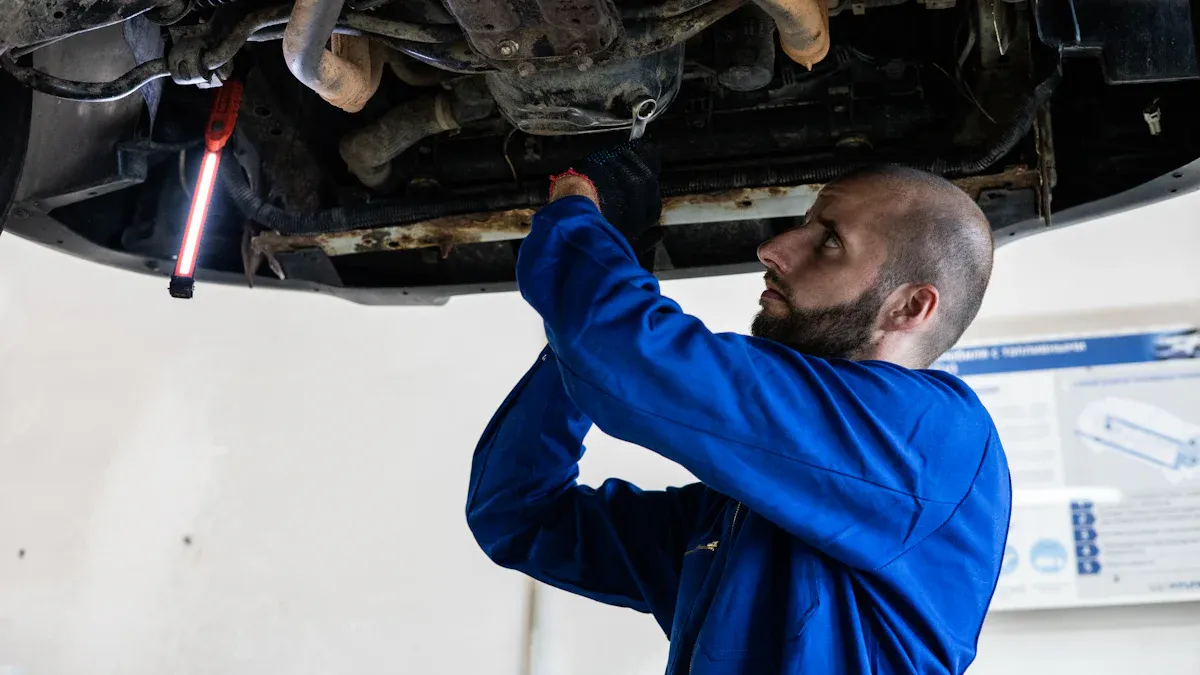
I believe maintaining your car's chassis is not just a good idea; it is essential for its longevity and your safety. Proper care ensures your vehicle remains reliable and performs at its best. I want you to understand how simple steps can make a huge difference.
Regular Inspections
I always perform regular inspections. This helps me catch small issues before they become big problems. I carefully check my frame and chassis for any damage, bending, or rust. I also look at my body panels to ensure they align correctly and have no excessive dents. I verify all my lights and signals work perfectly, including their brightness. Under the hood, I examine the engine and transmission for any leaks or unusual noises. I also pay close attention to my suspension and steering components, checking for wear or loose parts. For the frame itself, I visually inspect frame rails for hairline cracks and check crossmembers for deformation. I also examine suspension mounts for any signs of cracking or elongated holes. These checks give me peace of mind.
Addressing Rust and Corrosion
I know rust and corrosion can severely damage a chassis. That is why I take proactive steps to prevent it. I always recommend applying anti-rust sprays and undercoatings. These products create a strong protective barrier. They shield metal surfaces from moisture and corrosive elements, especially on the undercarriage. I also use rust-resistant car covers. These covers act as a shield against elements like moisture and UV rays. They keep these damaging factors off my car's surface. Regular inspection is crucial for me. I catch and address any rust issues early. I also try to avoid exposing my car to harsh elements. I minimize exposure to rain, snow, and salty air. This includes proper storage and cleaning road salt in winter.
Suspension and Steering Checks
I pay close attention to how my car feels on the road. This helps me identify any issues with my suspension and steering systems. If I notice increased bouncing after hitting a bump, I know my shock absorbers might be failing. I also watch for my vehicle pulling to one side. This can indicate an alignment problem or a worn steering component. Uneven tire wear is another clear sign for me. It often points to suspension or steering issues. I also listen for unusual noises, like clunking or squeaking, when I drive over rough roads. These sounds can signal loose or damaged parts. If my steering wheel feels shaky or abnormally stiff, I know it is time for a closer look. I want my car to handle predictably. These checks help me ensure it does.
Tire Care
I believe proper tire care is absolutely essential for your car's foundation. Your tires are the only part of your vehicle touching the road. They directly impact safety, handling, and even the lifespan of other chassis components. I always make sure my tires are in top shape. This simple habit saves money and keeps me safe.
First, I always check my tire pressure regularly. This is a small step with huge benefits. Driving with incorrect tire pressure, especially underinflation, puts extra stress on your wheels and suspension system. This added strain can cause damage. For example, your rims can bend. Your car also becomes more vulnerable to pothole damage. By keeping your tires properly inflated, you lighten the load on these critical parts. This significantly reduces the chance of expensive repairs. It also extends their lifespan. I know this simple check protects my investment.
I also rotate my tires regularly. This helps them wear evenly. Even wear means your tires last longer. It also ensures consistent grip on the road. I check my tire tread depth too. Good tread is vital for traction, especially in wet or snowy conditions. Worn tires can hydroplane easily. This makes driving very dangerous.
I want you to understand that taking care of your tires is not just about the tires themselves. It protects your entire chassis. It ensures your suspension works correctly. It keeps your wheels strong. Good tire care gives you better fuel economy. It also provides a smoother, safer ride. I urge you to make tire care a priority. It is a crucial part of maintaining your car's foundation.
I have shown you the chassis is truly your car's unseen hero. It is the critical foundation beneath everything. I urge you to value this essential structure. Understanding and maintaining your car's foundation ensures your safety. It guarantees optimal performance. You will enjoy a reliable and comfortable ride for many years. I know this attention to detail protects your investment.