





news
Automotive Safety The Unseen Power of the Vehicle Frame
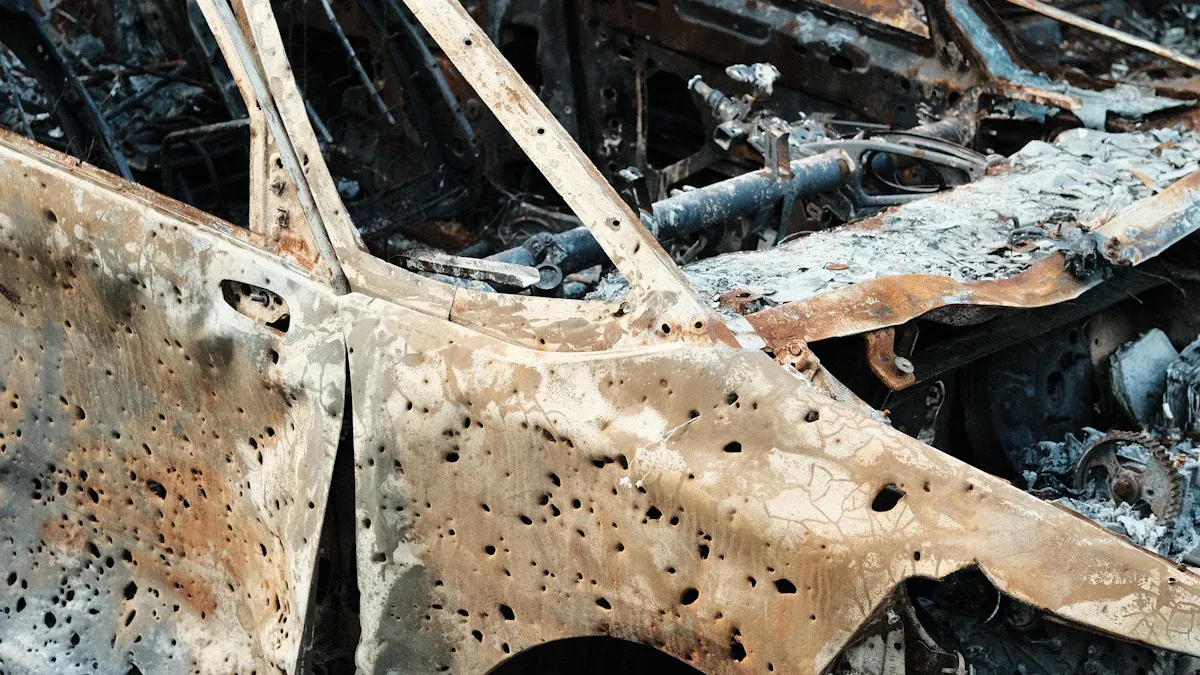
The vehicle frame is the car's ultimate guardian. It provides foundational structural integrity. It actively protects occupants during a collision. This powerful element absorbs and redirects immense crash forces. It safeguards passengers directly. We must recognize its critical, often unseen, role. Understanding how various vehicle frame parts work together truly highlights its engineering brilliance.
Key Takeaways
- The vehicle frame is the car's main safety part. It protects people during a crash.
- The frame has special areas called crumple zones. These zones bend to soak up crash energy.
- Strong parts like pillars and beams keep the car's inside safe. They stop it from crushing in.
- Modern cars use strong, light materials. These materials make the frame safer and better.
- The frame works with airbags and seatbelts. This teamwork keeps you safe in an accident.
Vehicle Frame's Core Function in Occupant Protection
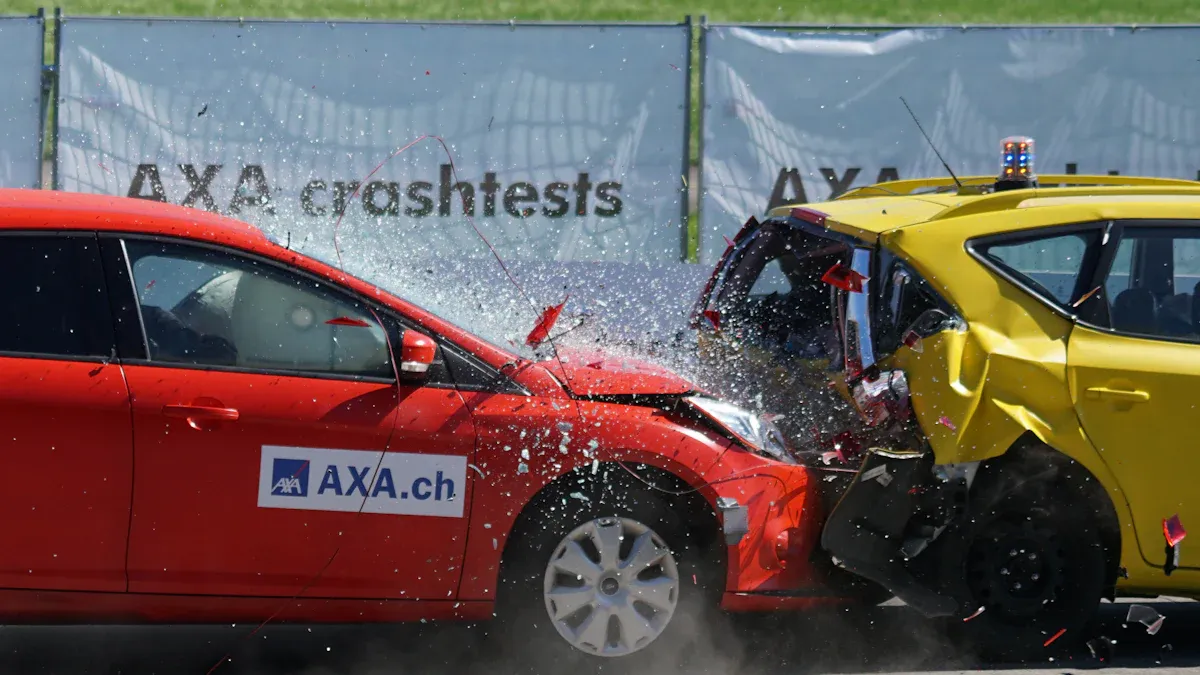
I believe the vehicle frame's most critical job is managing the brutal forces of a crash. It's not about being an unyielding shield; it's about controlled deformation. Engineers design these structures to absorb kinetic energy, transforming it so it doesn't reach you, the occupant. This process relies on fundamental physics. We consider the impulse-momentum theorem, which helps us understand how forces change over time during an impact. By analyzing force-time curves, we can determine the peak force and how long the impact lasts. This is crucial for designing systems that can withstand these loads.
Crash Energy Absorption
The core idea behind this absorption is the crumple zone. These are specific areas of the vehicle frame designed to collapse in a predictable way. Think of it as a three-phase process: 1. Crash initiation: The front of the car is stiff enough to trigger safety systems like belt pretensioners and airbags almost instantly. 2. Airbag deployment: The car's deceleration is kept low. This minimizes injury as the airbag inflates and seatbelts tighten around you. 3. Occupant contact: As you make contact with the airbag, the frontal structure stiffens further. This helps decelerate the vehicle substantially, preventing further shock loads from reaching you.
Engineers carefully design various vehicle frame parts for this purpose. The bumper, for instance, absorbs energy in low-speed crashes, saving you from costly repairs. Behind that, we have crash boxes. These are thin-walled tubes that collapse in specific patterns, efficiently absorbing energy. Longitudinal beams, which are longer and stronger, deform through folding, tearing, and bending. They often have reinforcements to optimize energy absorption. These components deform sequentially, from front to rear, managing the immense forces. The structures undergo buckling and plastic collapse, with the plasticized zones spreading from the impact area.
For even better crashworthiness, the primary crush zone is engineered for progressive crushing, almost like an accordion. Material choice is vital here. Both steel and aluminum alloy front rails can achieve this accordion-type folding. I've seen that aluminum alloys often show higher energy absorption per unit weight. While increasing thickness helps, using materials with higher yield strength, like advanced high-strength steels (DP, TRIP, boron steels), is a smarter approach. Even the shape matters; a hexagonal section generally absorbs more energy than a hat section. By picking the right cross-sections and internal reinforcement, engineers can reduce weight while maintaining strength. Polymer matrix composites offer even higher energy absorption per unit weight, sometimes two to three times that of steel or aluminum.
Impact beams are another key player. They absorb and redirect kinetic energy, keeping it away from the passenger cabin. They deform in a controlled manner, much like a spring. This controlled crumpling is essential. A car that's too rigid would transfer all the force directly to you, leading to worse injuries. Modern beams balance strength with flexibility. They also redirect forces along safer paths, like the car's floor or pillars. In frontal crashes, crumple zones and beams work together to dissipate energy before it reaches you. Side impact beams absorb and spread out force to prevent the door from intruding into your space.
I've learned that managing G-forces is paramount. Honda's G-Con (G-Force Control) standard, for example, focuses on reducing injuries by controlling impact energy. This standard constantly updates based on real-world accident data. Frame design also tackles crash compatibility. Honda's Advanced Compatibility Engineering (part of G-Con) addresses collisions between vehicles of different sizes. Without proper design, disparities in weight or size can lead to under-riding or over-riding, preventing the frame from absorbing energy effectively. By managing these interactions, G-forces on occupants are better controlled, even in diverse vehicle collisions. Studies even show that high-strength aluminum alloy (Al-7075T6) can absorb impact more effectively than carbon steel, leading to lower stress and higher safety factors, directly mitigating G-forces.
When we look at specific crumple zone components, we see frame segments built to bend or collapse. High-performance cars sometimes use a honeycomb design, which is stiff normally but collapses in a crash. Longitudinal members are designed to be straight in the center for a rigid safety cage, but curved at the front and rear to deform. We also use telescoping 'crash cans' or 'crush tubes' and hollow steel crash tubes for mounting bumpers. These are all designed to roll up and transform incident energy.
Regarding materials, metals absorb energy through plastic deformation and progressive crushing. Braided composites, however, use damage accumulation and progressive failure, often showing superior specific energy absorption. Fabric carbon/epoxy tubes have shown very high specific energy absorption. Aluminum offers excellent energy absorption per unit weight. While high-strength steel might absorb more in a similar design due to higher flow stress, aluminum's lower density allows for thicker components at the same weight. This can lead to more complex folding patterns and more energy absorption by weight.
Maintaining Cabin Integrity
Beyond absorbing energy, the vehicle frame has another crucial role: maintaining the integrity of the cabin. This means keeping the passenger compartment a safe, undeformed space for you.
In side-impact collisions, preventing intrusion is key. For larger vehicles like tractor-trailers, side safety guards (underride guards) act as physical barriers. They stop smaller vehicles from sliding underneath, significantly reducing the risk of intrusion into the passenger compartment. These guards deflect smaller vehicles away from the trailer's wheels and frame, protecting occupants from serious injuries. Studies show these guards can reduce fatalities and injuries by up to 98% in underride crashes. While this example is for trailers, the principle of preventing intrusion applies to all vehicle frame designs.
For rollovers, the structural requirements are stringent. The vehicle is designed with four pillars that create a rigid structure from the frame to the rooftop. The roof itself is built to withstand hard impacts and support the vehicle's weight if it rolls over. I find it fascinating that the windshield contributes significantly, providing up to 60% of the structural support to prevent the roof from caving in. The entire passenger compartment is a reinforced safety cell, designed to remain intact and minimize cabin intrusion. Engineers optimize load paths, strategically structuring Body-in-White (BIW) components to direct impact energy away from you. They use high-strength materials like Advanced High-Strength Steel (AHSS), aluminum, and composites to boost structural integrity. Rollover analysis is a critical part of the design process, ensuring the vehicle maintains its integrity and prevents occupant ejection.
Essential Vehicle Frame Parts and Their Safety Roles
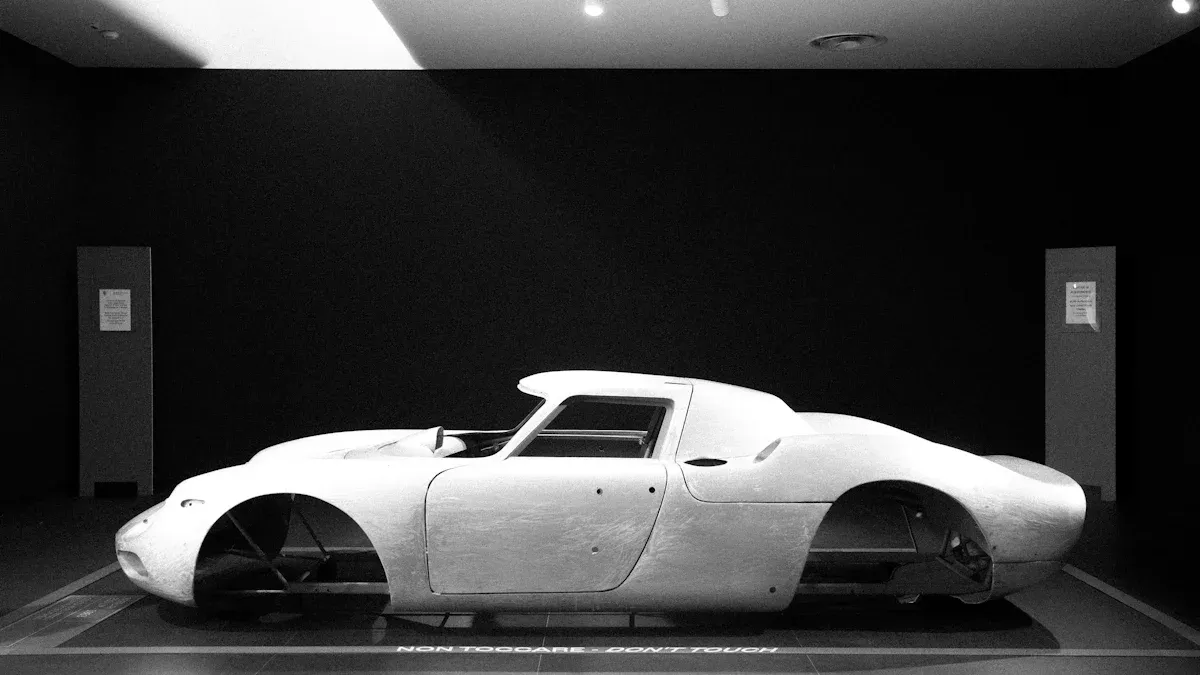
I want you to understand how each specific component of your car's structure works to keep you safe. These aren't just random pieces of metal; they are carefully engineered vehicle frame parts, each with a critical role in protecting you. The chassis and frame, for example, form the very backbone of your vehicle. They bear the primary load and distribute the weight of the car and its cargo. More importantly, they distribute and absorb impact forces during acceleration, braking, and maneuvering. This minimizes stress on individual components. By providing a strong and rigid structure, the chassis and frame protect you in a collision. They absorb and redirect impact forces away from the passenger compartment.
Frame Rails and Crossmembers
I see frame rails and crossmembers as the unsung heroes of your car's safety. They are fundamental vehicle frame parts. Frame rails are those crucial longitudinal beams running from front to back beneath your vehicle. They are integral to the car's structural integrity. They connect the bumper to the chassis and support suspension loads. In a collision, engineers design these rails to absorb and distribute crash forces throughout the vehicle. Damage to frame rails, like twisting or bending from impacts, compromises their ability to properly align and distribute forces. This significantly reduces crash protection and overall safety in subsequent accidents.
I know finite element models used in crash simulations clearly show that frame rails act as the vehicle's primary energy-absorbing structure during frontal crashes. This is especially true in between-rail impacts. These models illustrate how frame rails, along with other structural components like upper rails and bumpers, crush and move dynamically to absorb and distribute impact energy.
Crossmembers are the horizontal beams linking these frame rails. They provide extra support and stability. They increase chassis rigidity and support other components like the engine and transmission. Crossmembers contribute to torsional rigidity. They act as structural elements we can optimize for performance. For instance, engineers have downgauged rear crossmembers to 1.5mm to reduce mass while still meeting performance targets. This shows their inherent role in the vehicle's structural performance. Even when their contribution is less critical than other areas for certain load cases, they are foundational to the vehicle's stiffness. The vehicle frame is crucial for safety. It provides the strength needed to manage a crash. Key safety functions include absorbing crash forces to lessen impact on occupants and distributing forces to minimize vehicle damage. It also offers a strong, stable structure to support the vehicle's weight and payload. The chassis acts as the vehicle's base, essential for strength, safety, and stability. Crossmembers enhance structural support, making the frame stronger and more stable. Rails define the frame's shape and work with the chassis and crossmembers to form a robust base.
A, B, and C-Pillars
I consider the A, B, and C-pillars to be the guardians of your passenger compartment. These vertical supports are vital for maintaining cabin integrity, especially during rollovers. The A-pillars frame your windshield. The B-pillars are between the front and rear doors. The C-pillars are at the rear of the passenger compartment.
I have learned that the A-pillars are sometimes considered a weak point. They can crush inwards in severe impacts. However, the B-pillar, often called the roof halo, is incredibly strong and difficult to collapse. This design creates enough room between the strong B-pillar and a potentially crushed A-pillar for an occupant. This suggests a deliberate design to create a survival space. The vehicle's frame incorporates welded aluminum and high-strength steel to enhance stiffness. This protects occupants during impacts and rollovers. I know the vehicle meets, at a minimum, the FMVSS (Federal Motor Vehicle Safety Standards) for occupant protection and roof crush testing. This tells me its design, including the pillars, is engineered to pass these critical safety requirements.
Bumper Beams and Reinforcements
I believe bumper beams and their reinforcements are your car's first line of defense. They are crucial for low-speed impact protection. The primary function of bumper beams is to absorb crash energy. The bumper beam absorbs accidental kinetic energy by deflecting during low-speed impacts. Both the front metal bumper and bumper crush bracket are major contributors to this energy absorption.
I understand how these components work together. Upon impact, the bumper absorbs the initial force. Sensors or the bumper's design detect the sudden force to activate energy absorption. The energy-absorbing components, such as foam or thermoplastics, begin to deform. They convert kinetic energy into deformation energy. This prevents its transfer to the vehicle's frame. Maximum deformation absorbs the majority of the impact energy. This significantly reduces the force transmitted further into the vehicle. After impact, some materials may regain their shape. Others are designed for single-use to prevent additional damage. This ensures minimal repair costs and safety restoration. Automotive bumper energy-absorbing parts, including reinforcements, are specialized components integrated into vehicle bumpers. They mitigate impact forces during collisions. They are typically made from materials like thermoplastics, foams, or composites that deform under stress. Their main function is to absorb and dissipate energy. This reduces the force transmitted to the vehicle’s frame and occupants. These parts, which include foam fillers, crash boxes, and energy-absorbing reinforcements, are designed to work together. They enhance safety and durability.
Subframes and Engine Cradles
I want to talk about two more crucial, yet often overlooked, vehicle frame parts: subframes and engine cradles. These components play a vital role in your safety. They work behind the scenes to protect you from severe impacts. They are not just there to hold things in place. They are active participants in crash management.
Subframes, sometimes called support beams, are essential. I see them as extra layers of protection. They reinforce the vehicle's main structure. They also distribute loads from crash impacts across the broader chassis. This distribution helps maintain the vehicle's rigidity. It also boosts your safety. Crash beams, a specific type of subframe, sit at the front and rear of your car. They absorb collision forces. This directly protects you and your passengers. Manufacturers are always working to make subframes better. They want to offer superior crash protection. They also want to isolate vibrations more effectively. This directly improves your comfort and safety.
Engine cradles are another critical component. They manage the engine's movement during a collision. Imagine the force of a frontal crash. The engine, a heavy object, wants to keep moving forward. The engine cradle's job is to control this. It prevents the engine from intruding into the passenger compartment. This is a huge safety benefit. I know subframes are designed with efficient crush structures. These structures are around their perimeter and in the load path. This design helps manage the crash energy. It ensures the engine moves in a controlled way. It keeps it away from you. This careful engineering prevents serious injuries. It maintains the integrity of your safe space.
These components are not just static supports. They are dynamic safety features. They are designed to deform in a specific way. This controlled deformation absorbs energy. It redirects forces away from you. I believe understanding these hidden heroes helps us appreciate the complex engineering in modern cars. They are truly vital for your protection.
Evolution of Vehicle Frame Design for Enhanced Safety
I have seen incredible changes in how car frames are built. Engineers constantly find new ways to make cars safer. This evolution directly protects you better than ever before.
Body-on-Frame to Unibody Construction
I remember when most cars, especially trucks and SUVs, used a body-on-frame design. This meant the body sat on a separate, rigid frame. But this design had some serious safety issues.
Body-on-frame vehicles lack crumple zones. This can lead to severe injuries and even fatalities in collisions. Their higher stature, stiff torsion flexing, and high centers of gravity make them more prone to rollovers. Body-on-frame vehicles do not absorb impacts as efficiently. The frame absorbs the majority of the force from an accident. This force can transfer through the entire vehicle to the passengers. Body-on-frame trucks and SUVs lack energy-absorbing crumple zones. Accidents can be more severe for occupants.
I believe the shift to unibody construction was a game-changer for safety. Unibody cars integrate the body and frame into one strong piece. This design offers huge safety advantages.
- Unibody vehicles, with their one-piece design and integrated crumple zones, are engineered for superior crash test results. Engineers can direct specific loads and impacts away from the passenger compartment to protect occupants.
- Unibody constructions offer superior crash safety.
- Unibody frame vehicles offer a high degree of safety. It is easier to integrate elements like crumple zones and other advanced safety features into this type of construction.
Unibody constructions truly excel in crash test ratings. I have seen these vehicles achieve higher scores in frontal offset and side-impact tests. This is all thanks to advanced engineering. The integrated structure of unibody vehicles is crucial. It effectively absorbs and distributes crash energy. This design must meet strict safety standards for all types of impacts.
Advanced Materials and Engineering
I am always impressed by the advanced materials engineers use today. They make vehicle frames incredibly strong yet lighter. This directly enhances safety. The evolution of high-strength steels is a big part of this. Advanced high-strength steel (AHSS) allows for thinner, lighter components. These components still maintain structural integrity. This improves energy distribution.
Engineers choose specific steels for different parts of the frame. * Martensitic steels bolster safety cages. They increase strength and hardness without adding weight. * Transformation-Induced Plasticity (TRIP) steels offer high endurance. They provide substantial energy absorption. This makes them excellent for crumple zones. * Dual-phase steel is widely used for vehicle structures. It offers flexibility and fracture resistance.
Other advanced steels include Complex-Phase (CP), Ferritic-Bainitic (FB), Hot-Formed (HF), and Twinning-Induced Plasticity (TWIP) steels. I know modern cars like the Hyundai Sonata use hot-stamped AHSS. Volvo's XC40 incorporates Hot-Formed Boron steel in its safety cage. The Ram 1500 uses 98 percent AHSS in its frame. These materials are vital for your protection.
Vehicle Frame's Interplay with Other Safety Systems
I want you to understand that your car's frame does not work alone. It forms a critical partnership with other safety systems. This teamwork ensures your maximum protection during a crash.
Airbag Deployment and Sensor Integration
I believe the vehicle frame is the silent partner in airbag deployment. A properly aligned vehicle frame is absolutely essential for airbags to work correctly. Modern cars use unibody frames and crumple zones. These features absorb and redirect crash energy. If the frame is misaligned, these safety features may not function as intended. This includes airbag sensors and their deployment timing. Crash sensors are calibrated to precise points. Front and rear bumper reinforcements need proper alignment. Side-impact protection bars and intrusion resistance also depend on a correct frame. Even small changes in frame structure can disrupt energy transfer during a collision. This could cause delayed airbag deployment or incorrect energy absorption. It might even lead to structural components failing. Restoring factory dimensions through proper frame alignment is crucial for crashworthiness. It ensures passive safety features work.
Vehicle frame deformation triggers airbag deployment sensors. The 'crushability of the structure' tells the sensor when to deploy. Proper structural repair is critical. It restores a vehicle to its pre-accident crushability. Incorrect frame straightening can alter this crushability. This leads to airbags deploying too early or too late. If the structure becomes too stiff, deceleration increases. This causes early deployment. If the structure becomes too soft, deceleration is too slow. This leads to late deployment. Both scenarios can cause severe injury. Airbag deployment sensors accurately measure chassis deceleration. They trigger deployment when needed. The system ignores minor impacts. A kick to the bumper, for example, does not cause deployment. The chassis deceleration would not be strong or long-lasting enough. Vehicle structure is a crucial consideration for airbag deployment. Airbags deploy in areas most effective at preventing occupant injuries. Crash dynamics heavily influence this decision.
Seatbelt Anchorage Points
I know seatbelt anchorage points are another vital link to the vehicle frame. These points are not just bolted on; they are integral to the car's structure. For vehicles manufactured on or after September 17, 2024, these anchorages must withstand a 22,241 N (5,000 pound) force. This requirement also applies to vehicles manufactured on or after September 1, 2027. The term 'seat belt anchorage' includes the vehicle structure itself. It also includes any part of the vehicle whose failure would cause the belt to separate. This means the frame must be incredibly strong where your seatbelts attach. It ensures they hold you securely in place during an impact.
I believe the vehicle frame is truly the unsung hero of car safety. It forms the foundation for every other safety feature. This crucial component directly protects you. It manages crash energy and keeps the cabin strong. Its constant improvement drives automotive safety forward. I am convinced its unseen power makes all the difference.